
A woman in her late twenties wrote in after years of dealing with persistent body odor that didn't respond to any external treatment. She'd seen dermatologists. She'd tried every deodorant formulation on the market. She'd been tested for trimethylaminuria and came back borderline. Her quality of life had suffered in ways that were hard for others to understand. Her previous gastroenterologist had suggested chlorophyllin, and she wanted to know: does it actually do anything, or is this wishful thinking?
It was a fair question. Chlorophyllin supplements occupy an unusual space in the gut health world. They aren't probiotics. They aren't fiber. They work through a mechanism that most people, and many doctors, don't fully understand. And the evidence base is real but narrower than the marketing suggests.
Chlorophyll vs. Chlorophyllin: The Distinction That Matters
Most people who search for "chlorophyll supplements" are actually buying chlorophyllin, and the difference is significant.
Chlorophyll is the pigment that makes plants green. It's fat-soluble, chemically unstable, and breaks down rapidly once extracted from plant tissue. The chlorophyll in your salad is functional within the leaf structure but degrades quickly in supplement form.
Chlorophyllin is a semi-synthetic, water-soluble derivative of chlorophyll. During manufacturing, the magnesium ion at the center of the chlorophyll molecule is replaced with copper, and the phytol tail is removed. The resulting compound, sodium copper chlorophyllin, is more stable, more bioavailable in the aqueous environment of the GI tract, and behaves quite differently from natural chlorophyll.
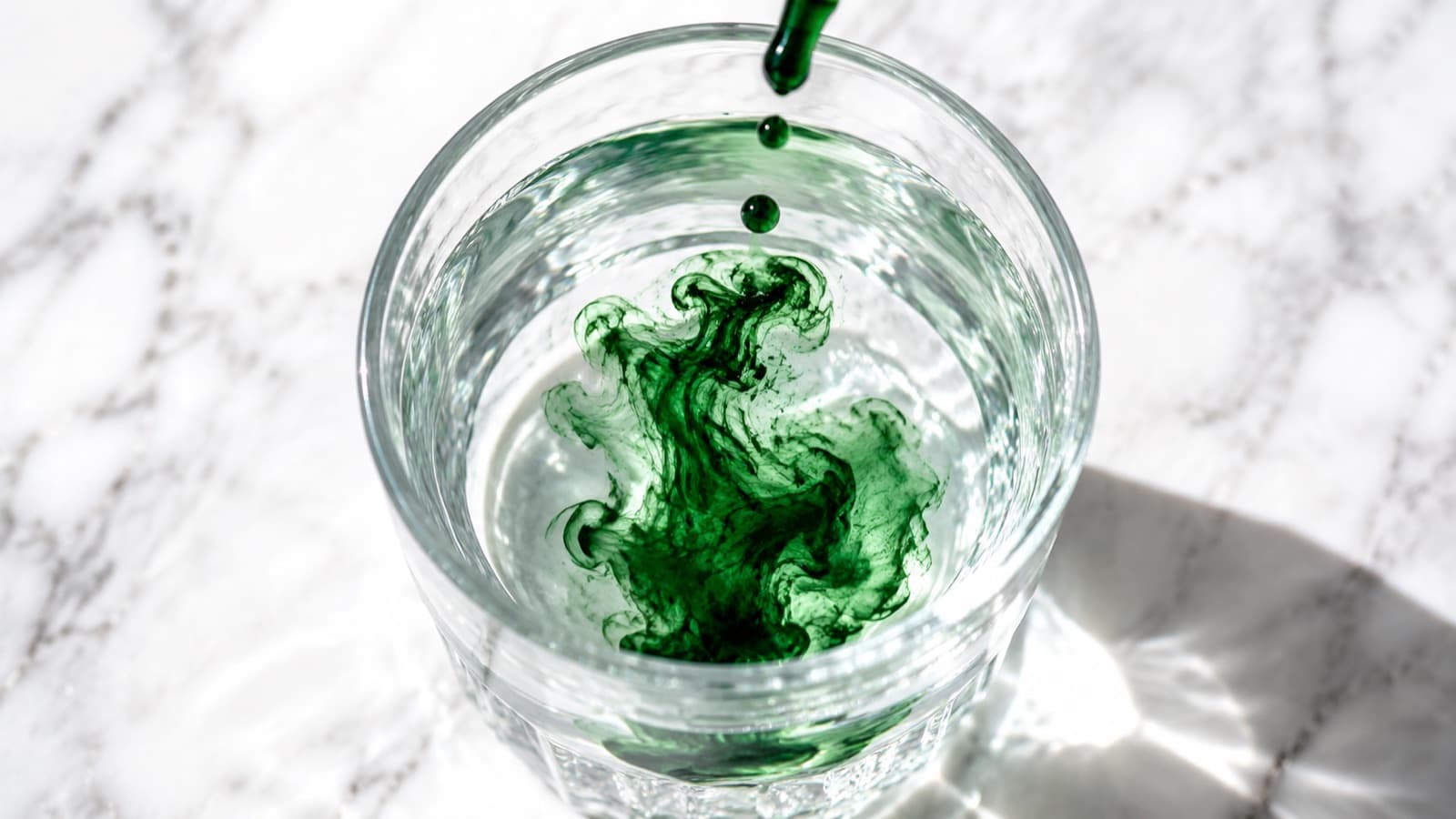
Here's where it gets interesting. Almost every clinical study on "chlorophyll supplements" has actually used chlorophyllin. The liquid chlorophyll drops trending on social media are typically chlorophyllin dissolved in water. The capsules sold for internal freshness are chlorophyllin. When people say chlorophyll, they almost always mean chlorophyllin. The distinction matters because the mechanisms of action and the evidence base apply specifically to the modified compound.
The Mechanism: How Chlorophyllin Works in the GI Tract
Chlorophyllin's primary mechanism in the gut is chemical complexation, specifically, the binding and sequestration of odor-forming compounds before they can be absorbed or excreted.
The porphyrin ring structure of chlorophyllin, that flat, copper-centered molecular architecture, acts as a molecular trap. It binds to a range of low-molecular-weight compounds in the intestinal lumen. The compounds it has the most affinity for include:
- Trimethylamine (TMA): A volatile amine produced by gut bacteria during the metabolism of choline, carnitine, and betaine from foods like fish, eggs, and red meat. TMA is the primary compound behind "fishy" body and breath odor.
- Indoles and skatoles: Produced during bacterial metabolism of tryptophan. These contribute to fecal odor and, when absorbed, are excreted through sweat and breath.
- Hydrogen sulfide and mercaptans: Sulfur-containing volatile compounds produced during the breakdown of sulfur-containing amino acids.
The binding happens in the gut, before these compounds reach systemic circulation. Chlorophyllin essentially intercepts them, forms stable complexes, and carries them through the GI tract for excretion rather than absorption. A 1980 study published in Surgery by Westphal and colleagues demonstrated this binding activity in both controlled laboratory conditions and clinical patients.
The TMAU Connection
The strongest clinical evidence for chlorophyllin comes from its use in trimethylaminuria (TMAU), a metabolic condition where the body cannot adequately convert TMA to its odorless oxide form (TMAO). People with TMAU accumulate TMA and excrete it through sweat, breath, and urine, causing a persistent and socially devastating odor.
A clinical case series published in the Annals of Internal Medicine documented significant reductions in urinary TMA concentrations in TMAU patients taking chlorophyllin. The doses used were typically 100 to 200 mg of sodium copper chlorophyllin per day, divided across meals. The effect was dose-dependent and reversed when supplementation stopped, confirming that chlorophyllin was binding TMA in the gut rather than altering the underlying metabolic defect.
This is important context. Chlorophyllin doesn't fix the cause of excess TMA production. It manages the output by intercepting the compound before it causes problems. It's a binding agent, not a cure.
What the Evidence Supports (And Where It Gets Thin)
Let me be direct about the strength of the evidence across different claims.
Strong Evidence
Odor reduction in extreme malodor conditions. The TMAU data is solid. Chlorophyllin reliably reduces measurable volatile amine concentrations in people with documented metabolic malodor. This extends to institutional settings: chlorophyllin was used for decades in nursing homes and ostomy care to reduce fecal and body odor, with early studies in Journal of the American Geriatrics Society dating back to the 1950s and 1960s confirming clinical benefit.
Binding of dietary mutagens. A 2001 randomized trial in Cancer Epidemiology, Biomarkers & Prevention by Egner et al. showed that chlorophyllin reduced urinary markers of aflatoxin exposure by 55% in a population with high dietary aflatoxin intake in Qidong, China. This was a rigorous trial and the results were striking. Chlorophyllin bound aflatoxin in the gut and prevented its absorption.
Moderate Evidence
General digestive odor management. Multiple smaller studies and extensive clinical use history suggest that chlorophyllin reduces fecal odor and may reduce flatus odor in the general population, not just in TMAU. However, most of these studies are older, use small sample sizes, and lack the rigorous design of the aflatoxin trial. The mechanism is plausible and consistent with the compound's known binding properties, but large-scale confirmatory studies in otherwise healthy populations are limited.
Weak or Preliminary Evidence
Antioxidant and anti-inflammatory effects. Cell culture and animal studies suggest chlorophyllin has antioxidant properties and may modulate inflammatory pathways. A 2012 review in Food and Chemical Toxicology summarized these findings. However, translating in vitro antioxidant activity to meaningful clinical outcomes is notoriously unreliable. I would not recommend chlorophyllin primarily as an antioxidant.
Weight management or metabolic effects. Some preliminary studies have explored chlorophyllin's effects on appetite hormones and lipid metabolism. A 2014 study in Appetite suggested that chlorophyll-containing supplements reduced hunger ratings. These findings are too early-stage to base recommendations on.
Skin health and wound healing. Topical chlorophyllin has been studied for wound healing and acne. This is a completely different application from oral supplementation for gut health, and I won't conflate the two.
Practical Considerations for Supplementation
If you're considering chlorophyllin, here's what to look at.
Dosing
Most clinical studies used 100 to 300 mg per day of sodium copper chlorophyllin, typically divided across meals. Taking it with meals is logical given the binding mechanism: you want the chlorophyllin present in the gut when the food-derived compounds are being produced.
What to Expect
The effects on digestive odor are typically noticeable within a few days to two weeks. If you're taking chlorophyllin for odor-related concerns and notice no change after three to four weeks at adequate doses, it's likely not going to work for your particular situation.
One predictable side effect: green or dark-green stool. This is harmless and simply reflects the copper-chlorophyllin pigment passing through. It can be alarming if you are not expecting it, so it's worth knowing in advance. Some people also notice green discoloration of the tongue with liquid formulations.
Choosing a Product
Several chlorophyllin-containing supplements are available. Refresh Internal Hygiene Supplement is formulated specifically for internal freshness and pairs sodium copper chlorophyllin with 25mg of vitamin B2, zinc, peppermint, parsley, and vitamin C. The formula update builds on Refresh's original chlorophyllin-led base with familiar daily-support ingredients people already understand: a B vitamin, mint, and leafy greens. Nature's Way Chlorofresh is another established option that has been on the market for years. NOW Supplements Chlorophyll Capsules offer a straightforward sodium copper chlorophyllin formulation at a competitive price point.
When evaluating products, check for sodium copper chlorophyllin on the ingredient label rather than just "chlorophyll." The dose per serving matters. And as with any supplement, look for brands that provide third-party testing or a certificate of analysis.
Who Might Benefit Most
Based on the evidence and research context and reader reports, chlorophyllin is most likely to help:
- People with diagnosed TMAU or borderline TMA metabolism
- People with persistent body or breath odor that hasn't responded to hygiene measures
- Ostomy users seeking odor management
- People whose diets are high in choline-rich and carnitine-rich foods (eggs, fish, red meat) and who notice odor-related effects from those foods
For the general population taking chlorophyllin as a daily wellness supplement, the evidence is thinner. It's unlikely to cause harm at standard doses, and the binding mechanism is real. But readers deserve realistic expectations, not the social media narrative that liquid chlorophyll will transform their health.
What Chlorophyllin Does Not Do
I want to be clear about the boundaries of what this compound offers.
Chlorophyllin does not meaningfully alter your gut microbiome composition. It's not a prebiotic, probiotic, or postbiotic. It doesn't feed beneficial bacteria or inhibit harmful ones. Its mechanism is chemical binding, not ecological modulation.
Chlorophyllin does not "detoxify" your body in any broad sense. The word detox is used loosely in supplement marketing, and while chlorophyllin does bind certain specific compounds in the gut, this is not the same as whole-body detoxification, which is primarily handled by your liver and kidneys.
Chlorophyllin does not replace addressing the root cause of digestive issues. If you have chronic bloating, irregular bowel movements, or other signs of an unhealthy gut, chlorophyllin is not the answer. It manages one specific downstream effect (odor-related compounds) without addressing the upstream microbial or dietary factors.
My Take
Chlorophyllin is a legitimate compound with a well-understood mechanism and a specific, evidence-backed application: binding volatile, odor-forming compounds in the gastrointestinal tract. For people dealing with clinically meaningful odor concerns, particularly those with TMAU or related metabolic variations, it can meaningfully improve quality of life.
For broader gut health goals, it's a secondary tool at best. The foundation remains dietary diversity, fiber intake, and microbial ecosystem support. If you want to understand the realistic timeline for that kind of foundational work, I've outlined what to expect month by month.
The reader I mentioned at the beginning did find meaningful relief with chlorophyllin, along with dietary modifications to reduce her TMA precursor intake. It wasn't a miracle. But it was a measurable, mechanistically sound intervention that improved her daily life. That's what good evidence-informed supplementation looks like.