
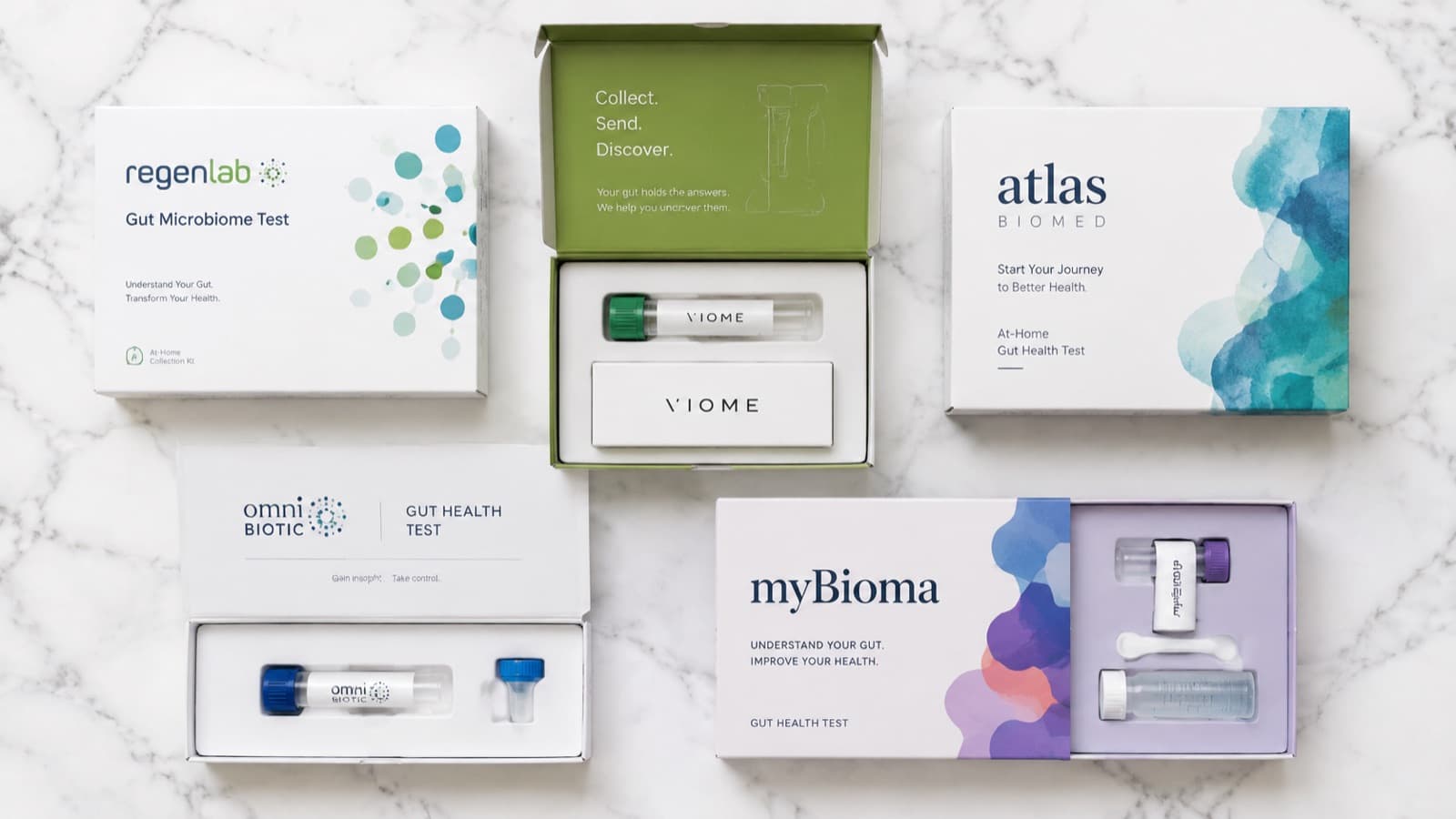

I have taken 11 at-home gut health tests over the past two years. Some told me things I could actually use. Others generated 30-page reports full of charts that meant essentially nothing.
The gap between the best and worst options in this market is enormous. A good gut health test gives you specific, actionable data about your microbiome composition, inflammatory markers, or metabolic outputs. A bad one gives you a colorful dashboard that says "your gut health score is 72" without explaining what that number means or what to do about it.
Here are the five tests I would actually recommend in 2026, ranked by the quality of actionable information they deliver per dollar spent.
How I evaluated each test
Before the rankings, here is what I measured. Every test was scored on four criteria:
- Science quality. What technology does the test use? 16S rRNA sequencing is the minimum standard. Metatranscriptomic analysis (what bacteria are actually doing, not just which ones are present) is better. Are the biomarkers validated?
- Actionability. Does the report tell you what to change? Can you actually do something with the results? A list of bacterial species without context is not actionable.
- Price. Total cost including shipping and any required subscriptions.
- Turnaround time. How long between mailing your sample and receiving results.
Each criterion was scored 1 to 5. I will give you the individual scores and totals.
1. Viome Gut Intelligence Test
| Criterion | Score | |---|---| | Science quality | 5/5 | | Actionability | 5/5 | | Price | 3/5 | | Turnaround | 4/5 | | Total | 17/20 |
Price: $149 (often on sale for $99) Technology: Metatranscriptomic sequencing (RNA-based) Turnaround: 2 to 3 weeks
Viome is the test I recommend most often, and it is the one I use for my own tracking. The reason is simple: it does not just tell you which bacteria are present. It tells you what they are doing.
For context. Most gut tests use 16S rRNA sequencing, which identifies bacterial species by reading a specific gene. Viome uses metatranscriptomics, which reads the RNA that bacteria are actively producing. The difference matters. A species might be present in large numbers but metabolically dormant. 16S would flag it as significant. Viome would show you that it is not actually doing much.
The actionability of Viome's reports is the strongest in the market. You get specific food recommendations (foods to enjoy, minimize, and avoid) based on your actual microbial activity. You get supplement recommendations. You get scores for inflammatory activity, metabolic fitness, and gut lining health.
The downside is price. At $149 it is the most expensive single test on this list. But the amount of usable data you get per dollar is higher than any competitor.
Check current Viome pricing on Amazon
2. Thorne Gut Health Test
| Criterion | Score | |---|---| | Science quality | 4/5 | | Actionability | 4/5 | | Price | 4/5 | | Turnaround | 3/5 | | Total | 15/20 |
Price: $99 Technology: PCR-based biomarker panel Turnaround: 3 to 4 weeks
Thorne takes a different approach. Instead of mapping your full microbiome, it measures specific biomarkers associated with gut health outcomes. The panel includes calprotectin (gut inflammation), pancreatic elastase (digestive enzyme function), short-chain fatty acids, and markers of gut permeability.
What the data actually suggests. If you already know your microbiome composition from a test like Viome, Thorne is an excellent complement. It answers a different question. Viome asks "who lives in your gut?" Thorne asks "how is your gut performing?"
I found Thorne's calprotectin measurement particularly useful. This is the same marker that gastroenterologists use clinically to screen for inflammatory bowel conditions. Getting it from an at-home test, without a doctor's visit, is genuinely valuable for long-term tracking.
The report is clean and well-organized. Each biomarker comes with a normal range, your result, and basic recommendations. Not as detailed as Viome's personalized food lists, but more clinically grounded.
Turnaround is the weak point. My last Thorne test took 26 days from mailing to results. That is longer than it should be.
Check current Thorne pricing on Amazon
3. Tiny Health Gut Test
| Criterion | Score | |---|---| | Science quality | 5/5 | | Actionability | 4/5 | | Price | 3/5 | | Turnaround | 4/5 | | Total | 16/20 |
Price: $199 (adult test), $199 (infant test) Technology: Whole genome shotgun sequencing Turnaround: 2 to 3 weeks
Tiny Health started as an infant microbiome testing company and expanded to adults. Their sequencing technology is the most comprehensive on this list. Whole genome shotgun sequencing reads everything, not just a single gene (like 16S) or active RNA (like Viome). You get species-level and strain-level identification.
The reason I rank it third despite having the best raw technology is the actionability gap. The reports are thorough but sometimes overwhelming. You get an enormous amount of data without always getting clear "do this next" guidance. If you have some background in microbiology, this is a goldmine. If you are new to gut health testing, the Viome report will serve you better.
That said, Tiny Health's customer support is excellent. They offer optional consultations with microbiome-trained dietitians who can walk you through your results. If you use that service, the actionability score jumps considerably.
One specific strength: Tiny Health is the only test on this list that reliably identifies Akkermansia muciniphila at the strain level. If you are tracking this specific species (and if you are reading this site, you probably should be), Tiny Health is the best option.
Check current Tiny Health pricing
4. Ombre (formerly Thryve)
| Criterion | Score | |---|---| | Science quality | 3/5 | | Actionability | 4/5 | | Price | 5/5 | | Turnaround | 5/5 | | Total | 17/20 |
Price: $59 Technology: 16S rRNA sequencing Turnaround: 1 to 2 weeks
Ombre is the best value option on this list by a significant margin. At $59, it costs less than half of any competitor, and the turnaround time is consistently the fastest I have experienced. My last test came back in 9 days.
The technology is the standard 16S rRNA approach, which means you get genus and species-level identification but not functional activity data. This is a meaningful limitation compared to Viome or Tiny Health. You know who is there, but not what they are doing.
Where Ombre exceeds expectations is the recommendation engine. Despite the simpler technology, their algorithm generates surprisingly specific probiotic and prebiotic recommendations based on your results. They also sell custom probiotics matched to your test results, though I have not tested those personally.
The science quality score of 3 reflects the inherent limitations of 16S, not any flaw in Ombre's execution. They do 16S well. It is just a less informative method.
For someone taking their first gut health test, Ombre is where I would start. The price point makes it accessible for repeat testing, which matters more than having the fanciest technology once.
Check current Ombre pricing on Amazon
5. Flore
| Criterion | Score | |---|---| | Science quality | 4/5 | | Actionability | 3/5 | | Price | 2/5 | | Turnaround | 4/5 | | Total | 13/20 |
Price: $189 for the test alone, $319 for the test plus 3 months of custom probiotics Technology: Whole genome shotgun sequencing Turnaround: 2 to 3 weeks
Flore is the most vertically integrated option. They test your gut, then sell you a custom-formulated probiotic based on your results. The test itself uses solid whole genome shotgun sequencing and produces a detailed microbiome map.
The actionability score is lower because their recommendations funnel heavily toward their own probiotic products. The report tells you what is low in your gut, then conveniently offers to sell you strains to fix it. This is not inherently wrong, as the science behind targeted probiotic supplementation is sound. But it creates a conflict of interest that other tests avoid.
I tested Flore twice. The microbiome data was consistent with my Viome and Tiny Health results, which gives me confidence in their sequencing accuracy. The custom probiotic I received seemed thoughtfully formulated. Whether it was better than an off-the-shelf option like Seed, I genuinely cannot say.
At $319 for the full package, Flore is the most expensive option. That is a lot to spend when the marginal benefit over Viome plus a good standalone probiotic is unclear.
The comparison table
| Test | Technology | Price | Turnaround | Best For | |---|---|---|---|---| | Viome | Metatranscriptomics | $149 | 2-3 weeks | Most actionable overall results | | Thorne | PCR biomarkers | $99 | 3-4 weeks | Gut inflammation and function markers | | Tiny Health | Shotgun sequencing | $199 | 2-3 weeks | Deepest species/strain-level data | | Ombre | 16S rRNA | $59 | 1-2 weeks | Budget-friendly first test | | Flore | Shotgun sequencing | $189-319 | 2-3 weeks | Custom probiotic matching |
Which test should you get?
My recommendation depends on where you are in your gut health journey.
First time testing. Get Ombre. It is $59, it is fast, and it will give you a meaningful baseline. If the results reveal something concerning, you can follow up with a more detailed test.
Serious optimization. Get Viome. The metatranscriptomic data and personalized food recommendations are worth the price if you are going to act on them.
Tracking over time. Use the same test consistently. Comparing results across different testing companies is unreliable because they use different methodologies and reference databases. Pick one and stick with it.
Concerned about inflammation. Get Thorne. The calprotectin and permeability markers give you clinical-grade data that the sequencing-based tests do not include.
Want the deepest possible data. Get Tiny Health, and pay for the dietitian consultation.
What these tests cannot tell you
A necessary caveat. None of these tests diagnose disease. They measure microbiome composition or functional biomarkers, but they cannot tell you if you have Crohn's, celiac, or colon cancer. If you have persistent symptoms, see a gastroenterologist. An at-home test is a monitoring tool, not a substitute for clinical care.
Microbiome science is still young. Take any single gut test result as a data point, not a verdict.
The best gut health test is the one you will actually use to change something. Data without action is just an expensive curiosity.
For a practical look at how I used these tests in a real experiment, see I Tracked My Gut Health for 90 Days.