
A reader once described a pattern that, on paper, looked like five separate problems. Bloating after every meal. A rash on her elbows that wouldn't clear. Brain fog so thick she'd stopped driving on highways. Three rounds of antibiotics in six months for recurring sinus infections. Her previous doctors had treated each symptom in isolation. Nobody had looked at her gut.
Within eight weeks of targeted microbiome restoration, every single symptom improved. Not because the gut is some mystical cure-all, but because when your microbial ecosystem falls out of balance, the consequences rarely stay contained to your digestive tract.
Here are seven signs that your gut microbiome may be telling you something important.
1. Chronic Bloating That Won't Quit
Everyone bloats occasionally. A big meal, certain vegetables, eating too fast. That's normal physiology. What isn't normal is bloating that shows up almost daily, regardless of what you eat.
When your gut bacteria are out of balance, a condition called dysbiosis, you often end up with too many gas-producing organisms and too few of the species that keep them in check. Certain bacteria ferment carbohydrates aggressively, producing excess hydrogen and methane gas. A 2019 study in Alimentary Pharmacology & Therapeutics found that patients with chronic bloating had significantly different microbial profiles compared to healthy controls, with overrepresentation of Firmicutes and reduced Bacteroidetes diversity.
Here's where it gets interesting. The bloating itself can become self-perpetuating. Excessive gas distends the intestinal walls, slows motility, and creates an environment where the gas-producing bacteria thrive even more.
What to watch for: Bloating that occurs more days than not, that isn't clearly tied to one food, and that worsens over weeks or months rather than staying stable.
2. Irregular Bowel Movements
I'm careful with this one because "regular" means different things to different bodies. Three times a day and three times a week both fall within the clinical normal range. What matters is consistency over time.
Dysbiosis disrupts bowel regularity through several mechanisms. Your gut bacteria produce short-chain fatty acids that regulate the pace of intestinal contractions. They influence water absorption in the colon. They even affect the mucus layer that keeps things moving smoothly. When the microbial balance shifts, all of these processes can go sideways.
Alternating between constipation and loose stools is particularly telling. A healthy microbiome tends to produce stable patterns. Rapid swings often indicate that the microbial ecosystem is unstable, with different bacterial populations gaining temporary dominance and then crashing.
What to watch for: Significant changes from your personal baseline that persist for more than two to three weeks, especially alternating patterns.
3. Food Intolerances That Develop Over Time
This is the sign that catches most of readers off guard. They could eat dairy or wheat or garlic their whole lives, and then suddenly those foods become a problem.
Let's slow down on this one. True food allergies involve the immune system and tend to be stable. Food intolerances, on the other hand, often reflect what's happening in the gut at a microbial level. Specific bacterial strains help break down specific food components. Lactobacillus species assist with lactose digestion. Various bacteria produce enzymes that handle FODMAPs and other fermentable carbohydrates.
When you lose those bacterial populations, through antibiotics, dietary changes, stress, or illness, you can lose the ability to comfortably digest foods you previously tolerated fine. A 2021 paper in Nature Reviews Gastroenterology & Hepatology described this as "acquired enzymatic insufficiency mediated by microbial depletion."
The good news is that because these intolerances are often microbial rather than immune-mediated, they can sometimes be reversed by restoring the missing populations.
What to watch for: New sensitivities to foods you previously ate without problems, especially if they developed after illness, antibiotics, or a period of major dietary change.
4. Persistent Fatigue
I see this constantly, and it's one of the most underappreciated signs of an unhealthy gut. Patients tell me they sleep eight hours and still wake up feeling unrested. Their bloodwork looks normal. Their thyroid is fine. Nobody can explain why they're so tired.
What the research actually shows is more nuanced than "gut bacteria give you energy." Your microbiome influences fatigue through at least three pathways. First, dysbiosis can increase intestinal permeability, allowing bacterial compounds like lipopolysaccharides (LPS) to enter the bloodstream. LPS triggers a low-grade inflammatory response, and inflammation is profoundly fatiguing. A 2020 study in Microbiome demonstrated that patients with chronic fatigue syndrome had measurably different gut microbial compositions and elevated markers of intestinal permeability.
Second, gut bacteria produce or regulate several B vitamins and other cofactors involved in cellular energy production. Third, the gut microbiome modulates cortisol rhythms through the hypothalamic-pituitary-adrenal axis, and disrupted cortisol patterns directly affect energy and sleep quality.
What to watch for: Fatigue that doesn't respond to more sleep, that isn't explained by other medical conditions, and that coincides with digestive symptoms, even mild ones.
5. Skin Issues
Your skin and your gut are in constant communication through what researchers call the gut-skin axis. If you want to go deeper on this topic, I've written a full breakdown of how the gut-skin connection works.
The mechanism works like this: when the intestinal barrier becomes compromised, inflammatory molecules and bacterial metabolites can enter systemic circulation. These compounds trigger immune responses throughout the body, and the skin, as the body's largest organ, often shows the effects.
Specific conditions have specific microbial links. Acne has been associated with reduced Lactobacillus and Bifidobacterium populations. Eczema research points to early-life microbial diversity as a protective factor. Rosacea has an unusually strong connection to small intestinal bacterial overgrowth (SIBO), with a 2008 study in Clinical Gastroenterology and Hepatology finding that SIBO treatment cleared rosacea symptoms in a significant percentage of patients.
What to watch for: Skin conditions that flare alongside digestive symptoms, skin issues that don't fully respond to topical treatments, or new skin problems that develop after gut-disrupting events.
6. Frequent Illness
Roughly 70 percent of your immune system resides in the gut-associated lymphoid tissue, or GALT. This isn't a metaphor. The physical infrastructure of immune surveillance is concentrated along the intestinal wall, where your body must constantly distinguish between beneficial microbes, food particles, and genuine threats.
A healthy microbiome trains and calibrates this immune system daily. Beneficial bacteria stimulate the production of secretory IgA, your mucosal immune defense. They compete with pathogens for resources and attachment sites. They produce antimicrobial compounds that directly inhibit harmful organisms.
When this ecosystem is disrupted, immune function suffers in measurable ways. A 2018 study in Cell showed that antibiotic-induced dysbiosis reduced influenza vaccine efficacy by impairing antibody responses. People with depleted microbiomes don't just get sick more often; they respond less effectively to infections and vaccinations.
What to watch for: Getting sick more than two to three times per year with infections, slow recovery from common illnesses, or recurrent infections in the same system (sinuses, urinary tract, skin).
7. Mood Changes and Brain Fog
The gut-brain axis is no longer a fringe concept. It's established science. Your enteric nervous system contains over 500 million neurons, and the vagus nerve provides a direct communication highway between your gut and your brain. Roughly 90 percent of the body's serotonin is produced in the gut, not the brain.
Dysbiosis affects mood and cognition through several pathways. Altered neurotransmitter production is one. Vagal nerve signaling changes are another. Systemic inflammation from intestinal permeability crosses the blood-brain barrier and affects neural function directly. A landmark 2019 study in Nature Microbiology analyzing over 1,000 subjects found that two bacterial genera, Coprococcus and Dialister, were consistently depleted in people with depression, regardless of antidepressant use.
Brain fog specifically, that difficulty concentrating, word-finding trouble, and sense of cognitive sluggishness, often tracks with intestinal permeability markers. When the gut barrier leaks, the blood-brain barrier often follows.
What to watch for: Mood changes or cognitive difficulties that coincide with digestive changes, anxiety or low mood that worsened after antibiotics or GI illness, or brain fog that fluctuates with what you eat.
When to See a Doctor vs. When to Start with Lifestyle Changes
Not every instance of bloating or fatigue means your microbiome is in crisis. The body fluctuates. Stress, travel, a course of antibiotics, a week of poor eating, all of these can temporarily shift the gut without indicating a serious problem.
Consider seeing a gastroenterologist if:
- You have multiple symptoms from this list occurring simultaneously
- Symptoms have persisted for more than six to eight weeks
- You notice blood in your stool, unintended weight loss, or difficulty swallowing
- Your symptoms are getting progressively worse rather than fluctuating
- Over-the-counter approaches haven't made a dent after a reasonable trial
A good rule of thumb: if your gut symptoms are affecting your quality of life, they deserve professional evaluation. You don't need to wait until things are severe.
For milder or newer symptoms, starting with foundational changes is reasonable:
- Dietary diversity: Aim for 30 or more different plant foods per week. A 2018 study from the American Gut Project (mSystems) found this was the single strongest predictor of microbial diversity, more than any supplement or specific diet.
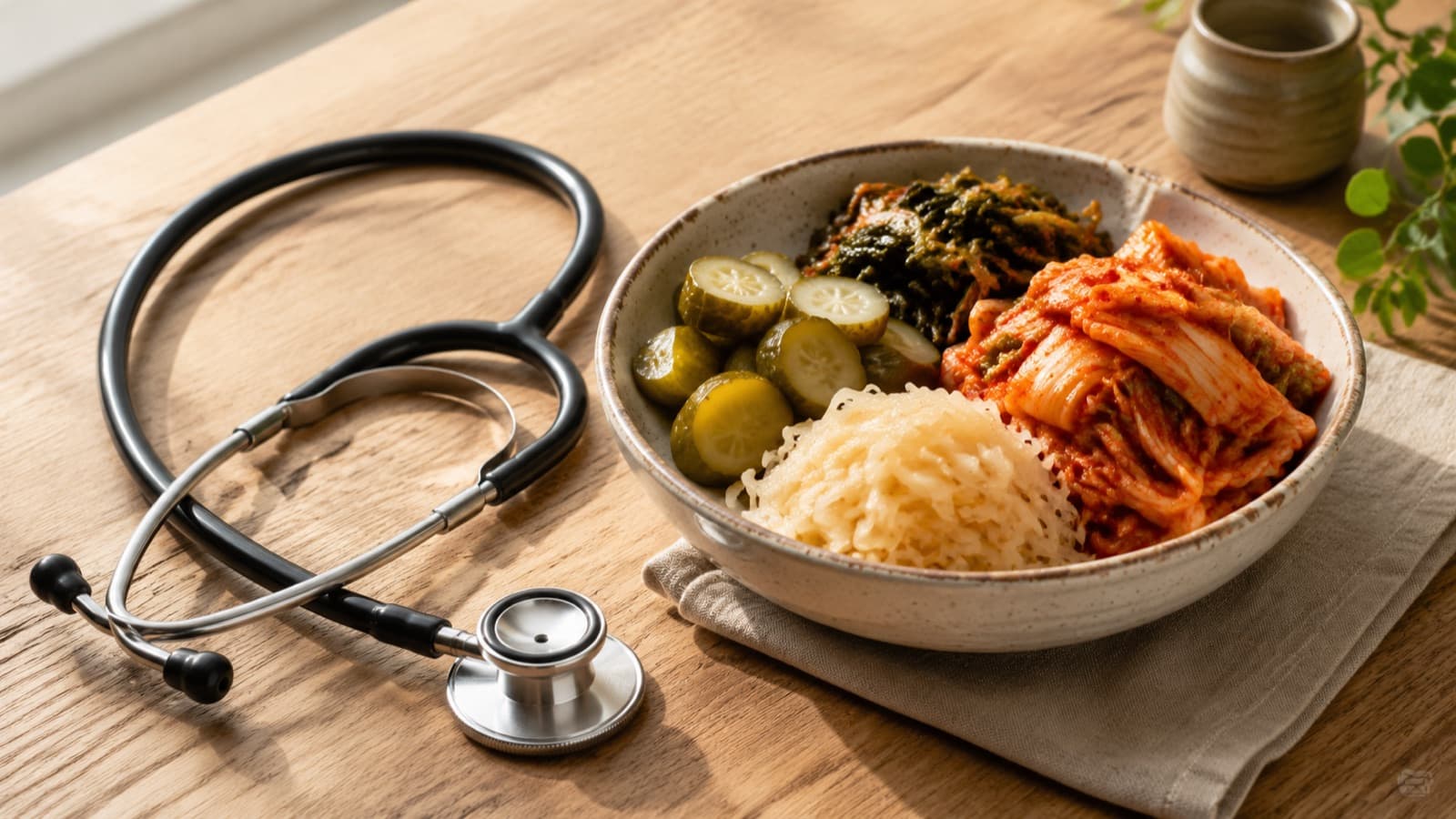
- Fermented foods: Yogurt, kefir, sauerkraut, kimchi. A 2021 Stanford study in Cell showed that a high-fermented-food diet increased microbial diversity and decreased inflammatory markers over 10 weeks.
- Fiber consistency: Sudden fiber increases cause problems. Gradual increases over two to three weeks allow your microbiome to adapt.
- Sleep and stress management: Both directly affect microbial composition. This isn't hand-waving. Disrupted circadian rhythms measurably alter gut bacteria populations within days.
The gut microbiome is resilient. Given the right conditions, it can recover and rebalance. But it does require attention, and the signs it sends are worth listening to.