
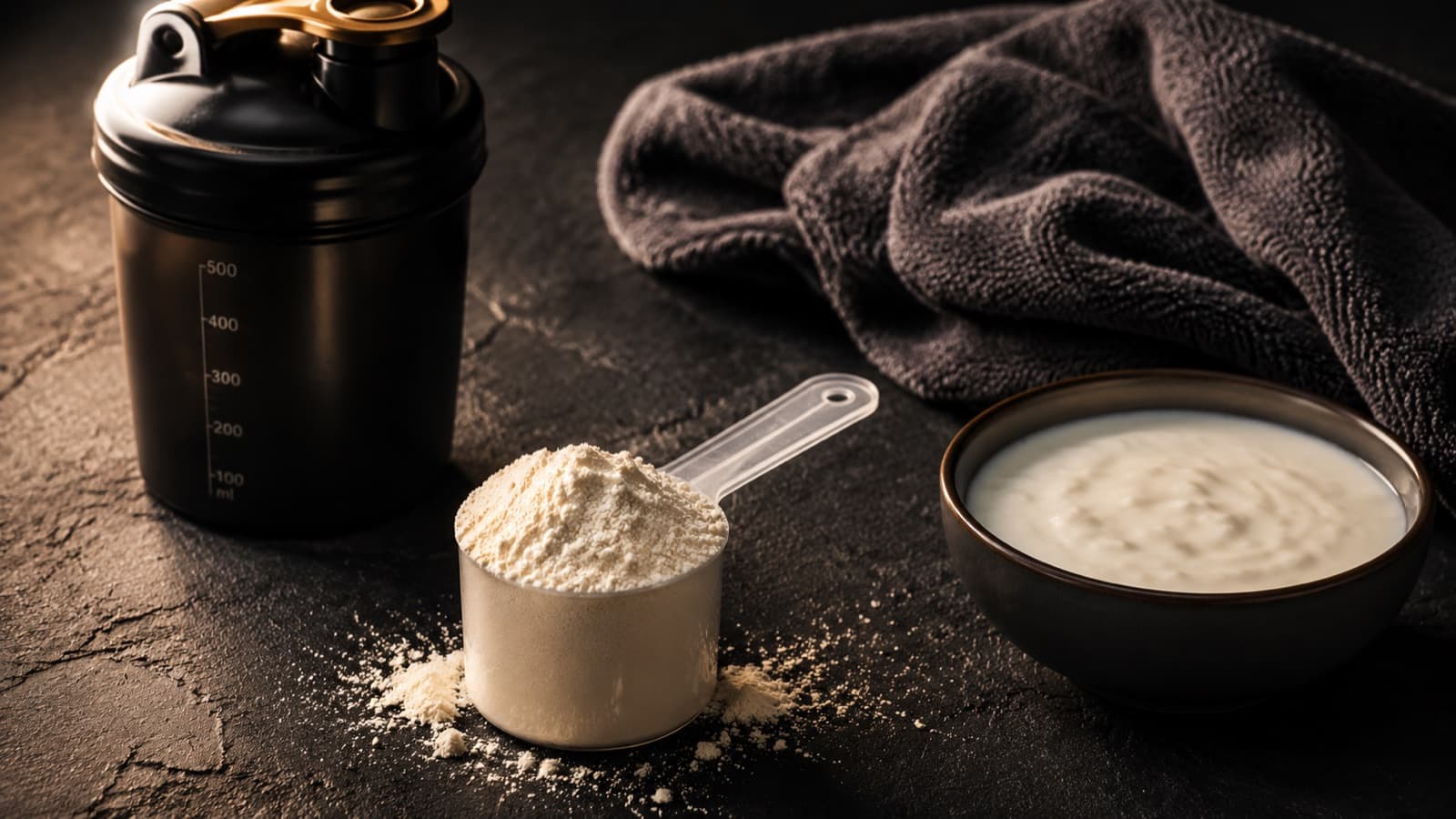

You slam a protein shake after a hard session. Twenty minutes later you're bloated, gassy, and wondering if the guy next to you on the bench can hear your stomach making noises like a haunted dishwasher.
Sound familiar?
Protein powder gut health is one of those topics the fitness industry loves to ignore. Brands slap "easy on the stomach" on the label and call it a day. Meanwhile half the people drinking their product are sprinting to the bathroom.
I've been there. Multiple times. I spent the better part of two years trying different protein powders before I figured out what was actually going on. So let's break down why protein shakes wreck some people's guts, why other people seem totally fine, and what you can actually do about it.
The Whey Problem (It's Probably Not What You Think)
Most people blame whey protein when their stomach revolts. And they're usually right. But the reason isn't "whey is bad for you." The reason is more specific than that.
Whey concentrate, the cheapest and most common form of whey, contains significant amounts of lactose. We're talking 5-8% lactose content in most commercial concentrates. If you're among the roughly 68% of the global population with some degree of lactose malabsorption, that's your answer right there.
Your body doesn't produce enough lactase enzyme to break down the lactose in your shake. The undigested lactose hits your large intestine, your gut bacteria ferment it, and now you're a human balloon animal.
But here's where it gets interesting. Whey protein also contains FODMAPs (fermentable carbohydrates that cause issues for people with sensitive guts). A 2019 study in the journal Nutrients found that even whey protein isolate, which has most of the lactose removed, can still trigger symptoms in FODMAP-sensitive individuals.
So it's not always just lactose. Sometimes it's the specific short-chain carbohydrates hanging around in the whey itself.
Whey Isolate vs Concentrate vs Hydrolysate
Not all whey is created equal when it comes to your gut.
Whey Concentrate is the least processed form. Cheaper. More lactose (typically 5-8%). More fat. More FODMAPs. If your stomach handles dairy fine, concentrate is totally adequate. If not, it's going to be a rough ride.
Whey Isolate goes through additional filtering that strips out most of the lactose (usually down to less than 1%). This is enough for many people with mild lactose issues. I switched to isolate about three years ago and it cut my post-shake bloating by probably 80%.
Whey Hydrolysate is pre-digested. The proteins are already broken down into smaller peptides. It's the easiest on the stomach but also the most expensive and (honestly) the worst tasting. A study published in the Journal of the International Society of Sports Nutrition found hydrolyzed whey caused fewer GI symptoms than standard concentrate in resistance-trained men.
Quick ranking for gut friendliness:
- Hydrolysate (easiest)
- Isolate (good middle ground)
- Concentrate (most likely to cause issues)
What About Casein?
Casein is whey's slower-digesting sibling. It forms a gel-like substance in your stomach, which is why people use it as a nighttime protein. But that slow digestion can be a double-edged sword for gut health.
Some people find casein more irritating than whey because it sits in the stomach longer. If you have any kind of motility issue or delayed gastric emptying, casein can make things worse. I tried a casein-before-bed protocol for about six weeks. Woke up bloated every single morning. Dropped it. Problem solved.
That said, casein contains less lactose than whey concentrate. So if lactose is your primary issue, casein might actually be better tolerated. Bodies are weird.
Plant Protein: The Gut-Friendly Alternative (With Caveats)
Plant proteins dodge the dairy issue entirely. No lactose. No casein. Sounds perfect.
Not so fast.
Many plant proteins contain their own gut irritants. Pea protein, the most popular plant-based option, is high in oligosaccharides (a type of FODMAP). Some people who switch from whey to pea protein find their bloating gets worse, not better.
Here's what I've found works:
- Rice protein tends to be the gentlest plant option. Low in common irritants. The amino acid profile isn't as complete as whey, but blending it with pea protein fixes that.
- Pea protein is great nutritionally but rough on sensitive stomachs. Start with half servings and build up.
- Hemp protein is easy to digest but lower in protein per scoop. You need more of it, which means more fiber, which can cause its own issues.
- Soy protein is well-studied and complete but contains phytoestrogens that some people prefer to avoid (the actual impact is more nuanced than the internet suggests).
A good gut-friendly plant option is the Orgain Organic Protein, which blends pea, brown rice, and chia for a complete profile without being too harsh on the stomach. I've used it during periods when my gut was particularly reactive and it worked well.
The Digestive Enzyme Fix
Real talk. Sometimes the issue isn't the protein source. It's your body's ability to break it down.
Digestive enzymes are proteins your body produces to break food into absorbable components. Some people don't produce enough protease (the enzyme that breaks down protein), especially when they're consuming 150+ grams of protein per day from supplements.
Adding a digestive enzyme supplement that includes protease, lactase, and lipase can make a real difference. I started taking one with my post-workout shake about a year ago and the improvement was noticeable within a week.
A solid option is NOW Super Enzymes, which covers the major bases. Take it right before or with your shake.
Other Ingredients That Bomb Your Gut
Before you blame the protein itself, check the rest of the label. A lot of gut distress from protein powders comes from the other stuff in there:
- Artificial sweeteners like sucralose and acesulfame potassium can disrupt gut bacteria and cause bloating. A 2022 study in Cell found that common artificial sweeteners alter the human gut microbiome.
- Sugar alcohols (erythritol, sorbitol, xylitol) are notorious for causing gas and diarrhea. They're partially fermented by gut bacteria.
- Thickeners and gums like carrageenan, guar gum, and xanthan gum can irritate sensitive stomachs. Carrageenan in particular has been linked to intestinal inflammation in some research.
- Inulin/chicory root fiber is added to boost the fiber count on the label. It's a prebiotic, which sounds great, but it's also a potent FODMAP that causes bloating in many people.
Practical Fixes: What Actually Works
Here's where it connects. After years of experimenting (on myself and comparing notes with other lifters), here's the protocol that works for most people dealing with protein powder gut health issues:
1. Switch to whey isolate or hydrolysate
If you're using concentrate, this single change fixes the problem for probably 60% of people. The Optimum Nutrition Gold Standard Isolate is a reliable, widely available option.
2. Check the sweetener
Look for products sweetened with stevia or monk fruit instead of sucralose or sugar alcohols. Your gut bacteria will thank you.
3. Add a digestive enzyme
Take it with your shake. Not after. With. You want the enzymes mixing with the protein in your stomach. Enzymedica Digest Gold is what I keep in my gym bag.
4. Don't chug it
Seriously. Sipping your shake over 10-15 minutes instead of slamming it in 30 seconds gives your digestive system time to keep up. This one simple change helps more than most people expect.
5. Try a probiotic
If your gut issues persist across multiple protein sources, the problem might be your gut microbiome itself. A quality probiotic can help rebalance things. I've seen good results combining a daily probiotic with the enzyme protocol.
6. Consider collagen protein for a break
Collagen protein isn't a complete protein (low in BCAAs), but it's extremely easy to digest and can give your gut a rest while still hitting some of your protein targets. I mix unflavored collagen into coffee on rest days.
The Bottom Line
Protein powder gut health problems are fixable. You don't have to choose between hitting your protein goals and having a functional digestive system.
Start with the protein source. Move to isolate if you're using concentrate. Check the label for gut-bombing additives. Add enzymes. Slow down your drinking pace.
And if you're still having issues after all of that, it might be time to look at your overall gut health rather than just the powder in your shaker bottle. Sometimes the protein shake is just the thing that reveals a gut that was already struggling.
Your gut is part of your training. Treat it that way.