
My friend Sarah was diagnosed with PCOS at twenty-five. She'd been dealing with irregular periods, stubborn weight gain around her midsection, and acne that no skincare routine could touch. Her endocrinologist put her on metformin and told her to lose weight. That was pretty much the whole plan.
What nobody mentioned was her gut.
For the next two years, Sarah dealt with constant bloating, alternating constipation and diarrhea, and a general feeling of digestive misery that she assumed was unrelated to her PCOS. She treated them as two separate problems. Saw two separate doctors. Got two separate sets of advice that never intersected.
Then I sent her a research paper. A 2020 study published in Nature Reviews Endocrinology that described a direct, mechanistic link between PCOS and gut dysbiosis. She read it, called me, and said, "Why didn't anyone tell me these were connected?"
I've been asking that same question about a lot of women's health topics lately.
What the research actually says
PCOS affects an estimated 8 to 13 percent of women of reproductive age worldwide, making it one of the most common hormonal disorders in women. For decades, the standard explanation focused on the ovaries and the hypothalamic-pituitary-gonadal axis. Too many androgens, insulin resistance, irregular ovulation. The treatment playbook was birth control, metformin, and weight loss advice.
But over the past five to eight years, a new thread of research has emerged. And it points to the gut as a previously overlooked driver of the condition.
Reduced microbial diversity
Multiple studies have found that women with PCOS have significantly lower gut microbial diversity compared to women without the condition. A 2018 study in the Journal of Clinical Endocrinology & Metabolism analyzed stool samples from women with and without PCOS and found distinct differences in bacterial composition.
Specifically, women with PCOS tended to have fewer species of Lactobacillus and Bifidobacterium (generally considered beneficial) and higher levels of certain gram-negative bacteria associated with inflammation.
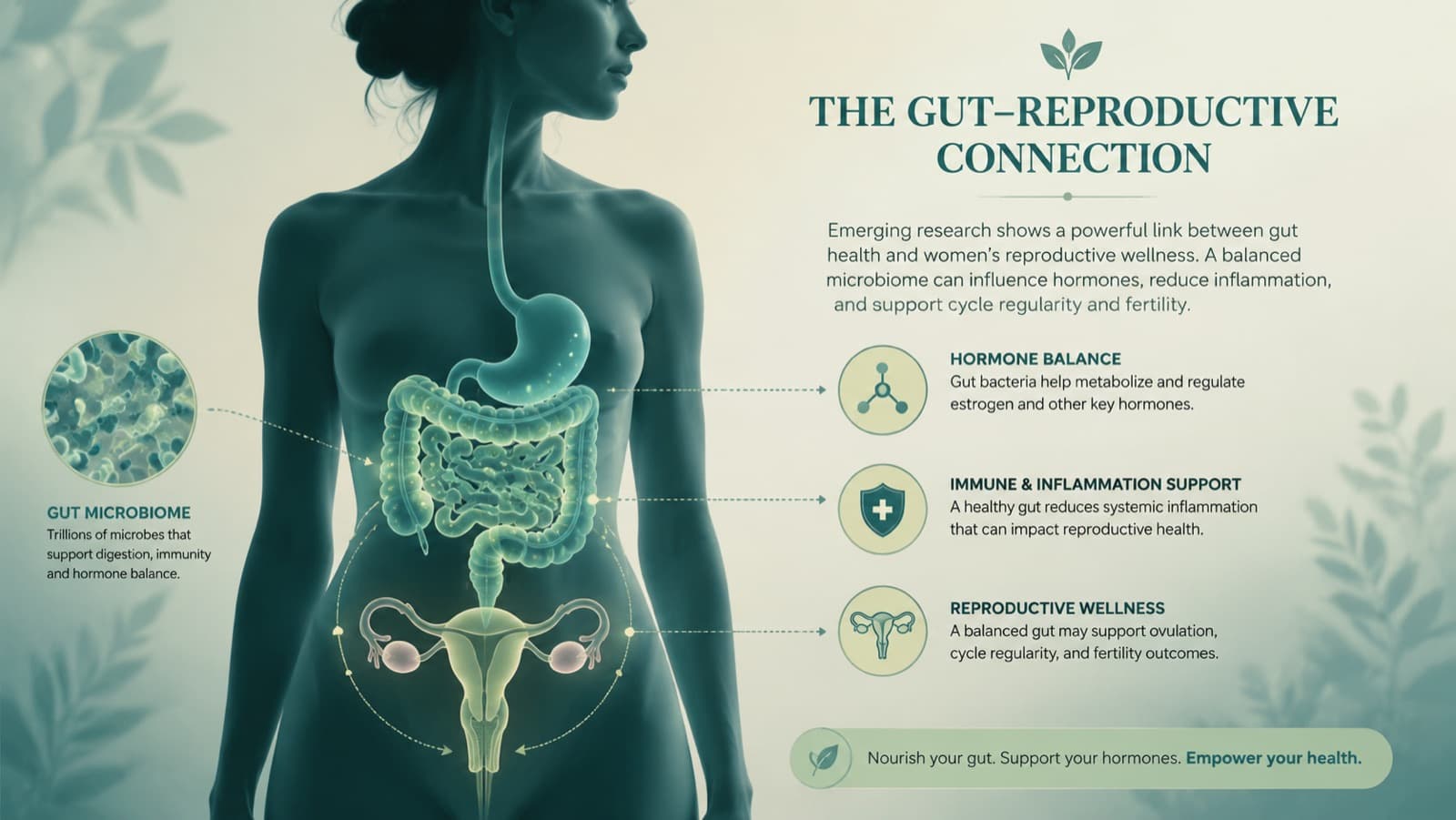
Microbial diversity isn't just a buzzword. It's a functional measurement. A more diverse gut ecosystem is more resilient, better at regulating immune responses, and more effective at metabolizing hormones. Reduced diversity is associated with increased inflammation, worse metabolic outcomes, and, critically, higher androgen levels.
The insulin resistance pathway
This is where it gets really interesting.
Insulin resistance is a hallmark of PCOS. About 70% of women with PCOS have some degree of insulin resistance, regardless of their body weight. The conventional explanation focused on genetics and lifestyle. But gut bacteria play a role here too.
Your gut bacteria produce metabolites, including short-chain fatty acids (SCFAs) like butyrate, propionate, and acetate. These metabolites directly influence insulin sensitivity. When the bacteria that produce beneficial SCFAs are depleted (as they are in many women with PCOS), insulin signaling suffers.
A 2019 study in Cell Metabolism demonstrated that transplanting gut bacteria from women with PCOS into germ-free mice caused the mice to develop insulin resistance, hormonal imbalances, and ovarian cyst-like changes. The mice developed PCOS-like symptoms just from receiving PCOS-associated gut bacteria.
Let that sink in. The gut bacteria alone were enough to trigger the metabolic and hormonal features of PCOS in an animal model.
The inflammation loop
Gut dysbiosis doesn't just affect insulin. It also drives chronic low-grade inflammation, which is another core feature of PCOS.
When the gut barrier is compromised (something called increased intestinal permeability, or "leaky gut"), bacterial components like lipopolysaccharides (LPS) leak into the bloodstream. LPS triggers an immune response that creates systemic inflammation. This inflammation, in turn, stimulates the ovaries to produce more androgens and worsens insulin resistance.
So the cycle looks like this:
- Gut dysbiosis leads to a weakened gut barrier
- A weakened gut barrier allows inflammatory molecules into the bloodstream
- Inflammation worsens insulin resistance
- Insulin resistance drives higher androgen production
- Higher androgens further disrupt the gut microbiome
It's a feedback loop. And it suggests that addressing the gut isn't just a nice add-on to PCOS treatment. It might be one of the most important interventions you can make.
Why this changes the treatment conversation
Traditional PCOS management focuses on symptoms: regulating periods with birth control, managing insulin with metformin, treating acne and hair growth with anti-androgens. These tools have their place. But they don't address what might be one of the underlying drivers.
If gut dysbiosis is contributing to the insulin resistance, inflammation, and hormonal imbalance that define PCOS, then gut-focused interventions could potentially improve all three at once. Not as a replacement for medical treatment, but as a foundation that makes everything else work better.
Sarah's experience illustrated this perfectly. When she started addressing her gut health alongside her standard PCOS medications, her bloating resolved within weeks. Her fasting insulin levels improved over several months. Her periods became more regular. Her endocrinologist was surprised. She wasn't.
What you can actually do about it
I want to be careful here. PCOS is a complex, heterogeneous condition. What works for one person may not work for another. But the following interventions have research support, and they're worth discussing with your healthcare provider.
Inositol: the supplement with serious evidence
If you've spent any time in PCOS communities online, you've probably heard about inositol. There's a good reason for that. It's one of the most well-studied supplements for PCOS, and it directly intersects with the gut-insulin connection.
Myo-inositol and D-chiro-inositol are two forms that work together as insulin sensitizers. They help your cells respond to insulin more effectively, which in turn reduces the compensatory insulin overproduction that drives androgen excess.
A 2017 meta-analysis in Gynecological Endocrinology found that myo-inositol supplementation improved ovulation rates, reduced androgen levels, and improved metabolic markers in women with PCOS. The standard dose used in most studies is 4,000 mg of myo-inositol combined with 100 mg of D-chiro-inositol daily, reflecting the body's natural 40:1 ratio.
Several good options are available:
- Ovasitol by Theralogix is the most commonly recommended by reproductive endocrinologists. It provides the 40:1 ratio in a tasteless powder you mix with water.
- Wholesome Story Myo & D-Chiro Inositol is a popular capsule form alternative.
Targeted probiotics
Given that PCOS is associated with specific microbial imbalances, probiotics that address those imbalances make sense. But not just any probiotic.
Look for strains with research backing in metabolic health and women's health:
- Lactobacillus rhamnosus has been shown to improve insulin sensitivity
- Lactobacillus acidophilus supports estrogen metabolism through the estrobolome
- Bifidobacterium lactis has anti-inflammatory properties and supports gut barrier function
A 2019 randomized controlled trial published in the Journal of Ovarian Research found that women with PCOS who took a multi-strain probiotic for 12 weeks had significant improvements in fasting insulin, inflammatory markers, and androgen levels compared to the placebo group.
A women's-focused probiotic like Garden of Life Women's Probiotics or Jarrow Formulas Fem-Dophilus can be a good starting point. Consistency matters more than brand. Take it daily for at least three months before evaluating whether it's helping.
An anti-inflammatory dietary approach
Diet matters for PCOS, but not in the way most women are told. The standard advice of "just lose weight" is reductive and often counterproductive (restrictive dieting can actually worsen gut dysbiosis and cortisol levels). A more useful framework is eating to reduce inflammation and support microbial diversity.
What that looks like in practice:
- Prioritize fiber. Aim for 30 to 40 grams daily from diverse plant sources. Fiber feeds the SCFA-producing bacteria that improve insulin sensitivity. Beans, lentils, vegetables, whole grains, nuts, and seeds should be the backbone of your diet.
- Eat fatty fish two to three times per week. Omega-3 fatty acids from salmon, sardines, and mackerel have potent anti-inflammatory effects. A 2018 study in Clinical Nutrition found that omega-3 supplementation reduced inflammatory markers and improved lipid profiles in women with PCOS.
- Include polyphenol-rich foods. Berries, green tea, dark chocolate, olive oil, and colorful vegetables contain polyphenols that act as prebiotics, selectively feeding beneficial gut bacteria.
- Reduce (don't eliminate) refined sugar and processed food. These feed inflammatory gut bacteria and spike insulin. You don't need to be perfect. But shifting the balance toward whole foods makes a measurable difference.
- Don't fear carbs. Women with PCOS are often told to go very low-carb, but extreme carbohydrate restriction can worsen thyroid function, increase cortisol, and deplete the fiber that your gut bacteria need. Moderate-carb, high-fiber is a more sustainable and gut-friendly approach.
Address the stress piece
I keep coming back to stress in these articles because the research keeps pointing to it. Women with PCOS have higher baseline cortisol levels than women without it. Chronic stress exacerbates insulin resistance, promotes gut dysbiosis, and increases inflammation.
Managing stress isn't a luxury for women with PCOS. It's a metabolic intervention.
What has the most evidence: regular moderate exercise (not excessive, which can raise cortisol), adequate sleep (seven to nine hours), and some form of mindfulness practice. Yoga specifically has been studied in PCOS populations and shown to improve hormonal profiles and reduce anxiety.
Consider gut testing
If you have PCOS and persistent digestive symptoms, a comprehensive stool test can provide useful data about your microbial composition, inflammatory markers, and digestive function. Tests like the GI-MAP or the Genova GI Effects profile can identify specific bacterial imbalances that targeted interventions can address.
This isn't necessary for everyone. But if you're doing everything right and still struggling, testing can help your provider create a more personalized plan.
What I want women with PCOS to know
The gut-PCOS connection is still emerging in the research. It's not fully understood. There are questions we can't answer yet about causation versus correlation, about which interventions work best for which phenotypes of PCOS, about the long-term impact of microbiome-focused treatment.
But here's what we do know: your gut and your PCOS are connected. The inflammation, the insulin resistance, the hormonal imbalance. These aren't isolated systems. They talk to each other, and the gut is one of the central switchboards.
If you're currently managing PCOS with medications alone, you're not doing anything wrong. But you might be missing a piece. Adding gut-focused strategies to your existing treatment plan isn't alternative medicine. It's supported by peer-reviewed research, and it's increasingly being recognized by endocrinologists and reproductive specialists.
Sarah texts me updates sometimes. She's been consistent with inositol, a targeted probiotic, and an anti-inflammatory diet for about eighteen months now. Her last labs showed normal fasting insulin for the first time in four years. Her periods have been coming every 30 to 35 days. Her bloating is gone.
She said something to me recently that stuck. "I spent so long thinking my body was fighting against me. Turns out, a big part of my body was just starving for the right bacteria."
I thought that was pretty well said.
For more on the hormonal side of gut health, check out our article on hormonal bloating and the practical guide to gut health tips every woman needs.