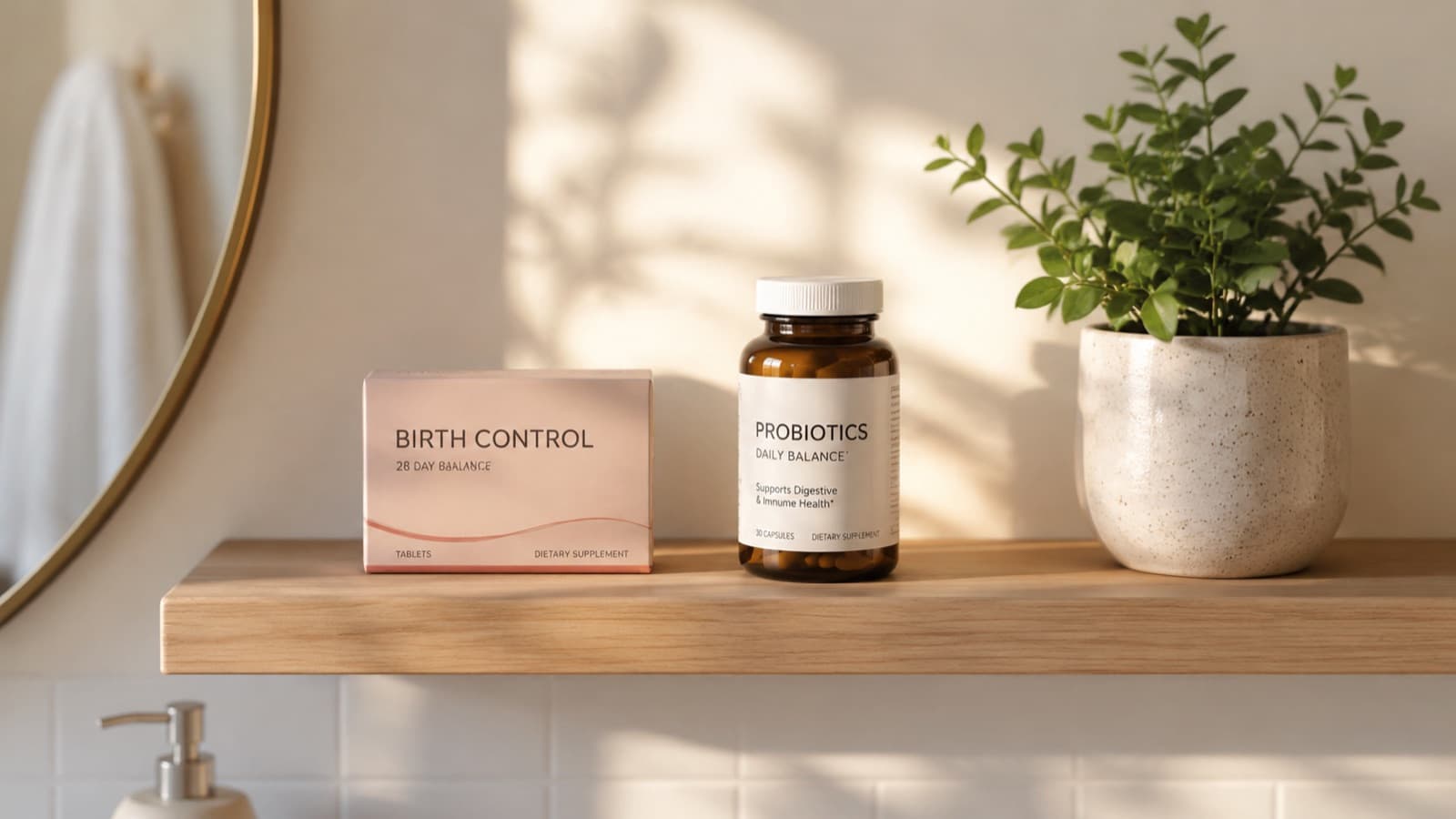

I went on the pill when I was nineteen. My gynecologist handed me the prescription like it was no different from recommending a multivitamin. Take it at the same time every day. You might feel nauseous for a week or two. That was the entire conversation.
Nobody mentioned my gut. Not once.
Twelve years later, when I finally stopped taking hormonal birth control, my digestion fell apart in a way I didn't expect. Bloating that wouldn't quit. Irregular bowel movements. A weird sensitivity to foods I'd eaten my whole life without issue. I thought something was seriously wrong with me. I went to a gastroenterologist, did a bunch of tests, and everything came back "normal."
So I started digging.
What I found was a growing body of research connecting hormonal birth control to significant changes in the gut microbiome. Changes that don't just vanish the day you stop taking the pill. And a recovery process that most doctors never talk about.
What hormonal birth control actually does to your gut
Let me be clear upfront: I'm not anti-birth control. It was the right choice for me for over a decade. But I think we deserve to know what it's doing inside our bodies beyond preventing pregnancy.
Hormonal birth control works by delivering synthetic estrogen and progestin (or progestin alone) to suppress ovulation. Those synthetic hormones don't just affect your ovaries. They circulate throughout your entire body, including your gastrointestinal tract.
Here's what the research shows:
It changes your gut bacteria. A 2020 study in the BMC Women's Health journal found that women on oral contraceptives had measurably different microbiome compositions compared to women who weren't. Specifically, certain beneficial bacterial strains were reduced, while some inflammatory species were more abundant.
It affects gut permeability. There's evidence that long-term use of hormonal contraceptives may increase intestinal permeability, sometimes called "leaky gut." A study published in Gut found a notable increase in the risk of Crohn's disease among women on the pill, suggesting that the gut barrier may be compromised.
It depletes key nutrients. Oral contraceptives are known to deplete B vitamins (especially B6, B12, and folate), magnesium, zinc, and vitamin C. Many of these nutrients are critical for gut lining integrity and healthy bacterial balance. You can't run a healthy gut on depleted fuel.
It disrupts the estrobolome. Remember the estrobolome? That collection of gut bacteria responsible for metabolizing estrogen? When you're on the pill, you're flooding your system with synthetic hormones. Your estrobolome doesn't process synthetic estrogen the same way it handles the natural kind. Over time, this can disrupt the balance of bacteria in that community.
I talked to my mom about this. She was on the pill for twenty years. She said, "I just thought my stomach problems were from getting older." Maybe they were. Maybe they weren't. We'll never know for sure. But the timing is worth noting.
The post-pill gut: what to expect when you stop
When you stop taking hormonal birth control, your body doesn't just snap back to its pre-pill state. Your natural hormonal cycle has been suppressed for months or years. It takes time for your hypothalamic-pituitary-ovarian axis (the hormonal command chain) to recalibrate.
During that recalibration, your gut is going through its own transition. Here's a rough timeline based on what I experienced and what the research suggests.
Weeks 1 through 4: the adjustment phase
Your body is clearing synthetic hormones. Estrogen and progesterone levels may be erratic as your system tries to remember how to produce them on its own. Bloating, gas, and irregular bowel movements are common during this window.
I remember this phase vividly. My stomach was unpredictable in a way it had never been, even when I was on the pill. Some days I was fine. Other days I looked six months pregnant by noon.
Months 1 through 3: the rebuilding phase
Your natural cycle is starting to return, though it may be irregular. Your gut bacteria are beginning to shift toward a new equilibrium, but they're not there yet. You might notice new food sensitivities or reactions to things that never bothered you before.
This is when I developed a temporary intolerance to eggs. Eggs. A food I'd eaten every morning for years. It resolved after about two months, but it was disorienting.
Months 3 through 6: the stabilization phase
For most women, the gut starts to settle around the three-to-six-month mark. Your microbiome is adapting to your natural hormonal fluctuations rather than the flat, synthetic hormonal environment of the pill. Bloating episodes become less frequent and less intense.
Some women feel fully recovered by month three. For others, especially those who were on the pill for many years, it can take closer to a year. I was somewhere in the middle. By month four, I felt like myself again. By month six, my digestion was actually better than it had been in years.
How to support your gut through the transition
This is the section I wish had existed when I was going through it. I pieced this together from research, conversations with my doctor, and a lot of trial and error.
1. Start a quality probiotic
Not all probiotics are created equal, and this matters more than usual when you're rebuilding after years of hormonal disruption. Look for strains that have been specifically studied in women's health contexts.
Lactobacillus rhamnosus and Lactobacillus reuteri are two of the most well-researched strains for women. A multi-strain probiotic that includes Bifidobacterium species is also a solid choice, since these tend to be depleted by hormonal contraceptives.
I started taking a women's specific probiotic about two weeks after stopping the pill, and I do think it helped smooth the transition. Here are a couple well-reviewed options:
- Garden of Life Women's Probiotic with 50 billion CFU and strains chosen for vaginal and digestive health
- Culturelle Women's Healthy Balance with Lactobacillus rhamnosus GG
2. Replenish depleted nutrients
Since oral contraceptives drain B vitamins, magnesium, zinc, and vitamin C, you'll want to actively replenish those stores. A good B-complex and magnesium supplement can go a long way.
Magnesium glycinate is my preferred form because it's gentle on the stomach and also supports sleep and muscle relaxation. I take 300 to 400 milligrams nightly.
For B vitamins, look for a methylated B-complex, especially if you have MTHFR variations (which are more common than most people realize).
3. Feed your bacteria
Probiotics introduce beneficial bacteria, but you also need to feed the bacteria that are already there. Prebiotic fiber does this. Think of it as fertilizer for your gut garden.
Good sources of prebiotic fiber include:
- Garlic and onions (cooked is fine)
- Asparagus
- Bananas (slightly underripe are highest in resistant starch)
- Oats
- Flaxseed
I added ground flaxseed to my morning smoothie every day during the transition, partly for the prebiotic fiber and partly because flax contains lignans that support healthy estrogen metabolism. Two birds.
4. Support your liver
This one surprised me, but it makes sense when you think about it. Your liver is responsible for processing and clearing synthetic hormones from your system. After years on the pill, it has been working overtime. Supporting liver function helps your body clear residual hormones more efficiently.
Cruciferous vegetables like broccoli, Brussels sprouts, kale, and cauliflower contain compounds (specifically DIM and sulforaphane) that support the liver's estrogen detoxification pathways.
I ate a lot of roasted broccoli during those first few months. Not because it's glamorous, but because it works.
5. Manage stress intentionally
I cannot stress this enough. (Pun somewhat intended.)
Stopping birth control is a major hormonal transition. Your cortisol system is already under additional pressure as your body recalibrates. Adding emotional or physical stress on top of that makes gut recovery harder.
Your gut and your stress response are wired together through the vagus nerve. High cortisol reduces gut motility, weakens the gut barrier, and shifts your microbiome toward less favorable bacterial strains.
During my post-pill transition, I made a deliberate effort to protect my sleep, reduce caffeine, and add ten minutes of breathwork to my morning routine. I'm not going to pretend I was perfect about it. But the weeks when I prioritized rest were noticeably better for my gut than the weeks when I was running on fumes.
6. Be patient with food sensitivities
If you develop new sensitivities after stopping the pill, don't panic. Your gut barrier may be temporarily more permeable, and your immune system is adjusting to new microbial neighbors. Many of these sensitivities are temporary.
That said, keeping a simple food journal during the first few months can help you identify patterns. I tracked what I ate and how I felt afterward for about eight weeks. It wasn't obsessive. Just a quick note on my phone after meals. The patterns became obvious pretty quickly, and it helped me avoid triggers without unnecessarily restricting my diet long-term.
When to talk to your doctor
Most post-pill gut symptoms resolve within three to six months. But if you're experiencing severe symptoms, things like persistent diarrhea, significant weight changes, new allergic reactions, or symptoms that are getting worse rather than better, please talk to a healthcare provider.
There are some conditions, including SIBO (small intestinal bacterial overgrowth), IBD flares, and autoimmune activation, that can be triggered or unmasked by the hormonal shift of stopping birth control. These need proper medical evaluation, not just supplements and patience.
I want to be honest about something. When I was going through this, I felt dismissed by the first doctor I talked to. He told me to eat more fiber and wait it out. The second doctor, a female gastroenterologist, actually listened. She ordered a comprehensive stool test, checked my nutrient levels, and gave me a targeted plan. Finding the right provider matters.
The part that changed everything for me
Looking back, the most valuable thing I got from this experience wasn't a specific supplement or food hack. It was understanding that my gut and my hormones are in constant conversation.
The pill had essentially muted one side of that conversation for twelve years. When I stopped, my body had to relearn how to communicate internally. The bloating, the sensitivities, the irregular digestion? Those weren't malfunctions. They were my system waking back up and figuring out how to run itself again.
If you're going through this right now, or if you're planning to stop birth control soon, know that what you're experiencing is real, it's well-documented, and it does get better. Give your body the support it needs, give yourself some grace, and trust the process.
Your gut knows how to heal. It just needs a little time and a lot less synthetic estrogen.
For more on how your hormones and gut interact throughout your cycle, check out the hormonal bloating connection and our piece on how your period affects your digestion.