
Last January, my 6-year-old got a double ear infection. Then my 9-year-old caught strep throat. Then I got a sinus infection that wouldn't quit. Three rounds of antibiotics in our household in one month.
By February, all three of us were dealing with digestive issues. My youngest had diarrhea for a week after finishing his amoxicillin. My oldest complained her stomach "felt wrong." And I was bloated every single day in a way I hadn't experienced before the antibiotics.
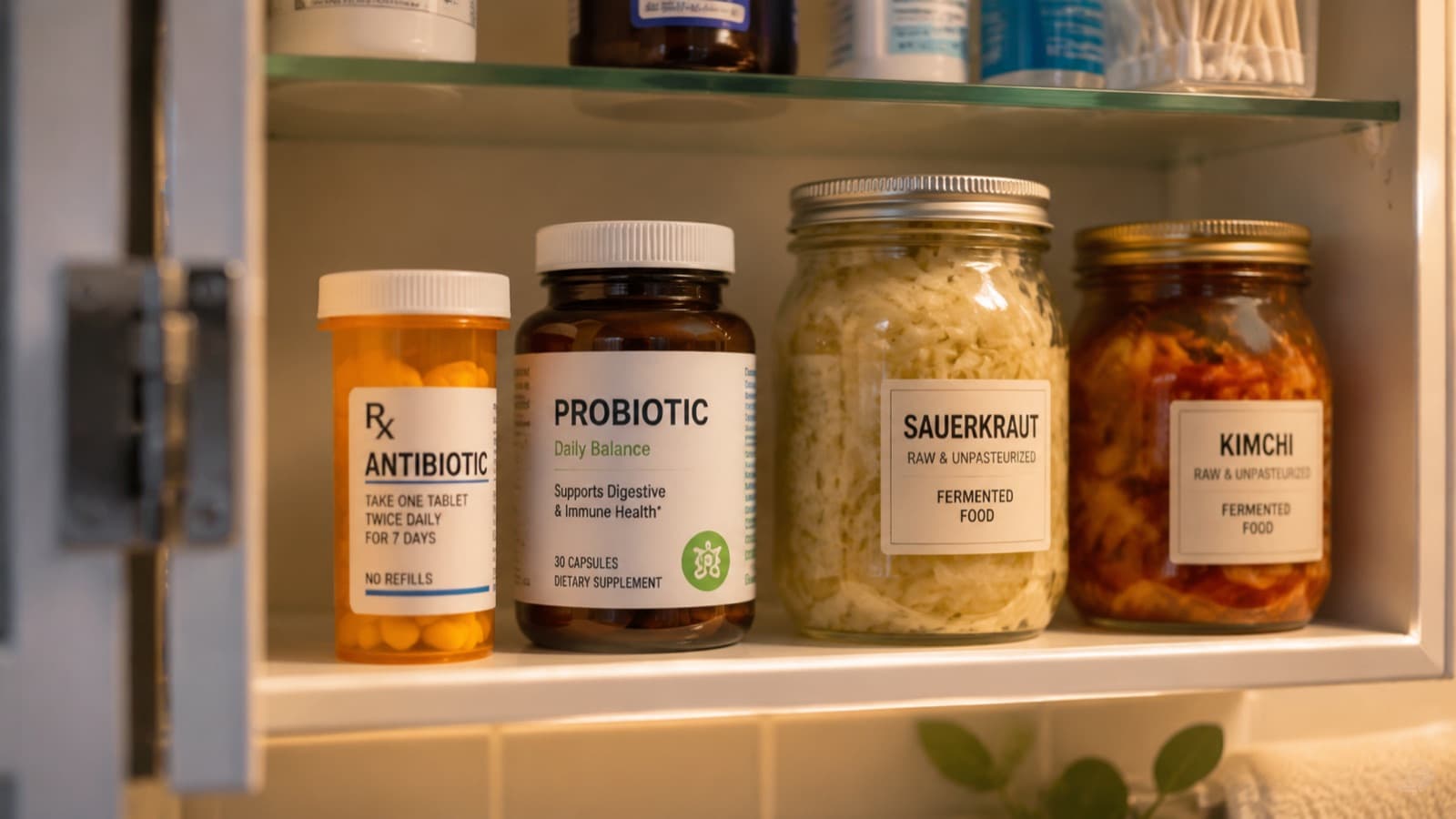
Our pediatrician was not surprised. "Antibiotics are necessary," she said. "But they're not selective. They take out the bad bacteria and a lot of the good ones along with them."
That conversation sent me down a deep research rabbit hole about gut health after antibiotics. Here's everything I learned, organized into what I wish someone had handed me before that first prescription.
What Antibiotics Actually Do to Your Gut
Let's start with the uncomfortable truth. Antibiotics are incredibly effective at killing harmful bacteria. That's why they exist. But they can't tell the difference between the bacteria causing your kid's ear infection and the beneficial bacteria that keep their gut healthy.
A single course of antibiotics can reduce gut microbial diversity by 30 to 40 percent, according to research published in mBio. Some species recover within weeks. Others can take months. And some may not come back at all without deliberate effort.
Here's what happens in the gut during and after antibiotics:
- During treatment: Antibiotic-sensitive bacteria die off rapidly. This creates open space in the gut ecosystem.
- Immediately after: Opportunistic organisms, including potentially harmful bacteria and yeast like Candida, rush to fill the empty space. This is why diarrhea and yeast infections are so common after antibiotics.
- Weeks 1 through 4: The gut begins to recover, but the microbial community is less diverse and less stable than before. This is the window where people are most vulnerable to secondary infections and digestive issues.
- Months 1 through 6: Gradual recovery continues, but research from Stanford University found that certain beneficial species can remain depleted for up to six months after a single antibiotic course.
This doesn't mean you shouldn't take antibiotics when they're needed. Untreated bacterial infections are far more dangerous than temporary gut disruption. But it does mean the recovery phase deserves real attention.
The Probiotics-During-Antibiotics Debate
This is one of the most common questions I get: do you take probiotics at the same time as antibiotics, or wait until after?
The answer, based on current research, is both. But with a catch.
The Case for Taking Probiotics During Antibiotics
A 2019 meta-analysis in the Journal of the American Medical Association reviewing 42 clinical trials found that taking probiotics during antibiotic treatment reduced the risk of antibiotic-associated diarrhea by 37%. For kids specifically, the reduction was even higher, around 50%.
The key is timing. Take your probiotic at least 2 to 3 hours apart from your antibiotic dose. This gives the probiotic organisms a better chance of surviving. If your antibiotic is twice daily (morning and evening), take the probiotic at midday.
The Case for Continuing After
A 2018 study in Cell complicated things by suggesting that probiotics taken immediately after antibiotics might actually delay the gut microbiome's natural recovery. However, this study used a specific protocol and has been debated in follow-up research. The current consensus among most gastroenterologists and pediatricians, including ours, is that probiotics after antibiotics are beneficial, especially if you choose the right strains.
The Practical Answer
Here's what our pediatrician recommended and what we actually did:
- Start probiotics on day one of the antibiotic course
- Take them 2 to 3 hours apart from the antibiotic
- Continue probiotics for at least 4 weeks after the antibiotic course ends
- For kids, use a strain with pediatric research behind it
The Strains That Actually Matter
Not all probiotic strains are equal when it comes to antibiotic recovery. Two strains stand above the rest in terms of clinical evidence.
Saccharomyces boulardii
This is actually a beneficial yeast, not a bacteria, which means antibiotics can't kill it. It's the only probiotic that works even when taken at the same time as an antibiotic.
The evidence for S. boulardii is strong. A Cochrane Review found it significantly reduced the risk of antibiotic-associated diarrhea in both adults and children. It's also been shown to help prevent C. difficile infection, which is one of the most serious complications of antibiotic use.
For adults: Jarrow Formulas Saccharomyces Boulardii provides 5 billion CFUs per capsule.
For kids: Florastor Kids is specifically formulated with S. boulardii in a powder packet that mixes into food or drinks. This is what we used for both kids during and after their antibiotics. My 6-year-old mixed it into applesauce. My 9-year-old mixed it into juice.
Lactobacillus rhamnosus GG
This is the most studied probiotic strain in pediatric medicine. Period. Hundreds of clinical trials have examined LGG in children, and it consistently shows benefits for reducing antibiotic-associated diarrhea, shortening the duration of infectious diarrhea, and supporting immune recovery.
The important distinction: Lactobacillus rhamnosus GG is a specific strain. Generic "Lactobacillus" probiotics may not have the same effects. Look for "GG" or the strain designation "ATCC 53103" on the label.
For adults: Culturelle Daily Probiotic contains 10 billion CFUs of LGG specifically.
For kids: Culturelle Kids Daily Probiotic contains 5 billion CFUs of LGG in a chewable tablet.
Other Helpful Strains
- Bifidobacterium lactis BB-12: One of the most studied bifidobacteria, shown to support recovery of the gut's bifidobacterium population, which antibiotics tend to hit especially hard.
- Lactobacillus acidophilus NCFM: Well-studied for general digestive recovery.
For a multi-strain option that covers several of these, Garden of Life Dr. Formulated Probiotics includes LGG plus multiple other clinically studied strains.
The Recovery Timeline
Here's what to expect and what to do at each stage. I'm being specific because "take a probiotic and eat yogurt" wasn't detailed enough for me when both my kids were dealing with post-antibiotic digestive chaos.
Week 1: Damage Control
What's happening: Your gut is in its most vulnerable state. Beneficial bacteria populations have crashed. Opportunistic organisms are trying to take over. Diarrhea, cramping, and bloating are common and normal.
What to do:
- Continue probiotics (both S. boulardii and LGG if possible)
- Eat easily digestible foods: bananas, rice, applesauce, toast (the classic BRAT diet has its limits, but it's useful for acute digestive distress)
- Add plain yogurt with live cultures, even small amounts
- Stay hydrated. Diarrhea depletes fluids and electrolytes fast, especially in kids
- Avoid sugar and refined carbs, which feed the opportunistic organisms trying to colonize
For kids specifically: Don't force food. Offer small, frequent meals. Yogurt, bananas, and toast are usually well-tolerated even when appetites are low. Pedialyte or similar electrolyte solutions help prevent dehydration if diarrhea is persistent.
Weeks 2 to 4: Rebuilding
What's happening: Bacterial populations are beginning to recover, but diversity is still low. Digestive function is improving but may not feel "normal" yet.
What to do:
- Continue daily probiotics
- Start introducing prebiotic-rich foods to feed the recovering bacteria: oats, bananas (especially slightly green ones), garlic, onions, leeks, asparagus
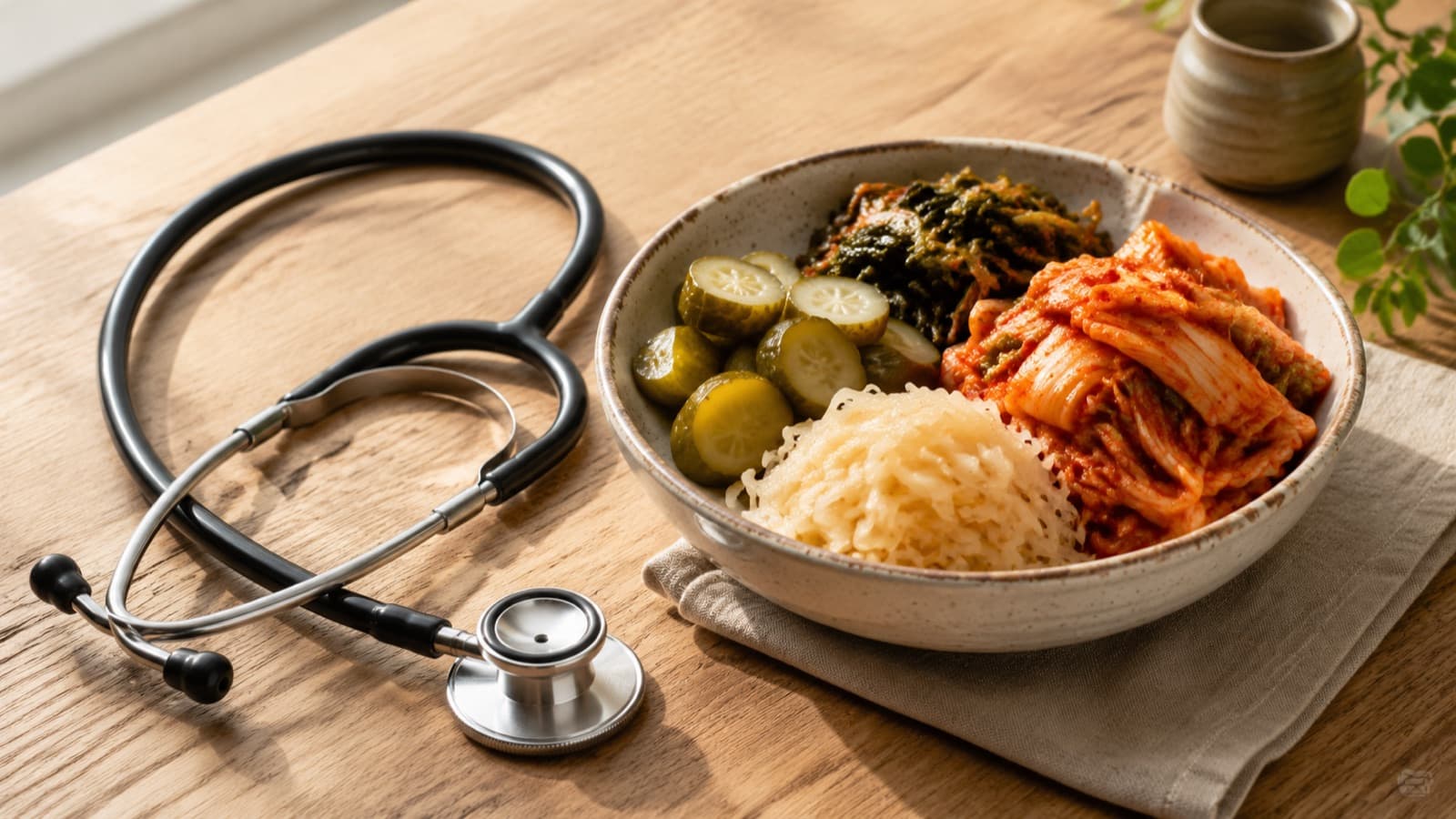
- Add fermented foods: yogurt, kefir, sauerkraut, mild kimchi. Variety matters here because different fermented foods contain different strains
- Prebiotic fiber powder can help bridge the gap if getting enough prebiotic food sources is difficult. Start with a half dose and increase gradually
- Increase dietary fiber slowly. Too much too fast on a recovering gut can cause more bloating
For kids specifically: This is when my kids' appetites came back and I could start working in more variety. Smoothies with kefir and banana were the easiest delivery system. My 9-year-old also started eating overnight oats during this phase.
Months 1 to 3: Diversifying
What's happening: Major bacterial populations have largely recovered, but the fine-tuned diversity of a healthy microbiome takes longer to rebuild. Some species may still be depleted.
What to do:
- Continue probiotics (you can reduce to a maintenance dose if your practitioner recommends it)
- Focus on dietary diversity. Research published in the American Gut Project found that people who eat 30 or more different plant foods per week have significantly more diverse gut microbiomes. You don't need to hit 30, but variety is genuinely important during recovery
- Include polyphenol-rich foods: berries, dark chocolate, green tea, olive oil. Polyphenols act as food for beneficial bacteria
- Consider adding bone broth or collagen powder, which provide amino acids that support gut lining repair. Vital Proteins Collagen Peptides dissolves in coffee or smoothies
For kids specifically: By this point, both my kids were eating normally again. I kept them on their daily probiotic and focused on keeping their diet as varied as possible. The fermented food habits we built during recovery actually stuck, which was an unexpected win.
Months 3 to 6: Full Recovery
What's happening: For most people, the microbiome has largely returned to its pre-antibiotic state. But some studies show that specific populations can remain altered for six months or longer.
What to do:
- Transition from a recovery mindset to a maintenance mindset
- Keep up the habits that serve you: daily probiotic, prebiotic fiber, fermented foods, dietary diversity
- If digestive symptoms persist beyond three months post-antibiotics, talk to your doctor. Persistent symptoms could indicate that a specific bacterial population hasn't recovered, or that something else is going on
Kid-Specific Guidance
Kids' microbiomes are still developing, which means antibiotic disruption can potentially have longer-lasting effects than in adults. A 2016 study in Cell Host & Microbe found that early-life antibiotic exposure altered microbiome development in ways that persisted for years.
This isn't meant to scare you out of necessary antibiotics. It's meant to emphasize that gut recovery in kids deserves active attention.
Dosing for Kids
- Ages 1 to 3: S. boulardii powder mixed into food. L. rhamnosus GG in drops or powder. Follow package dosing or ask your pediatrician.
- Ages 3 to 7: Chewable probiotics become an option. Culturelle Kids and Florastor Kids are both well-tolerated. My 6-year-old takes the Culturelle chewable and the Florastor powder separately.
- Ages 7 and up: Can typically take adult-formulation capsules at a kid-appropriate dose, or continue with kids' formulations. Check with your pediatrician.
Foods Kids Will Eat During Recovery
In the first week after antibiotics, my kids ate approximately four foods each. Here's what worked:
- Plain yogurt with honey and berries
- Bananas (always bananas)
- Toast with butter
- Chicken noodle soup (homemade or low-sodium canned)
- Applesauce mixed with probiotic powder
- Scrambled eggs
- White rice with butter
By week two, we added:
- Oatmeal with fruit
- Smoothies with kefir
- Quesadillas with whole wheat tortillas
- Sweet potato fries
- Peanut butter and banana sandwiches
Not glamorous. Not Instagram-worthy. But it got nutrients and probiotics into kids who didn't feel great and didn't want to eat much.
When to Call the Doctor
Gut recovery after antibiotics is usually manageable at home. But certain symptoms warrant a call to your pediatrician or doctor:
- Diarrhea that lasts more than 7 days after finishing antibiotics
- Blood or mucus in stool
- Fever that develops after the antibiotic course ends
- Severe abdominal pain
- Signs of dehydration in kids (dry mouth, fewer wet diapers, no tears when crying, lethargy)
- Symptoms of C. difficile infection (watery diarrhea 3+ times per day, fever, loss of appetite)
C. difficile is rare but serious, especially in kids who've had multiple rounds of antibiotics. If your child has had two or more courses in a short period and develops persistent watery diarrhea, get it checked.
What I Wish Someone Had Told Me Earlier
The biggest mistake I made was treating antibiotic recovery as a one-week thing. Take the antibiotics, eat some yogurt, move on.
In reality, meaningful gut recovery takes weeks to months. The good news is that the actions required are simple. A daily probiotic, some fermented foods, prebiotic fiber, and a varied diet. These aren't complicated interventions. They just need consistency.
The second thing I wish I'd known: start the probiotics on day one of antibiotics, not after. The evidence for starting early is clear, and it can prevent a lot of the digestive misery that comes during treatment.
We're ten months past our three-antibiotic January now. All three of us are back to normal digestive function. The probiotic habit stuck. The kefir smoothies stuck. My 9-year-old voluntarily eats sauerkraut now, which I genuinely never expected.
Antibiotics saved us from painful, potentially dangerous infections. The gut recovery work saved us from months of digestive fallout. Both were necessary. Neither was optional.
Related reading: