
I cleaned out my pantry last fall. Not in a dramatic, throw-everything-away, fresh-start kind of way. More like a curious, let-me-actually-read-these-ingredient-labels kind of way.
What I found was not great.
Products I'd been buying for years, stuff I considered "healthy" or at least "fine," contained ingredients that research consistently links to gut disruption. Artificial sweeteners I didn't know were there. Emulsifiers I couldn't pronounce. Refined oils in places I didn't expect.
Here's the thing: I'm not about to tell you to purge your kitchen and start over with $400 worth of specialty groceries. That's not realistic, and honestly, perfection isn't the point. But knowing which common ingredients are most likely to cause problems, and knowing what to grab instead, can make a genuine difference in how your family's guts feel.
These are the five biggest gut disruptors I found in my own kitchen, what the science says about each one, and the specific swaps I made.
1. Artificial Sweeteners
This was the one that surprised me most, because I'd been putting sucralose in my coffee every morning for three years thinking I was making a healthy choice.
What They Do to Your Gut
Multiple studies have shown that artificial sweeteners, particularly sucralose (Splenda), saccharin, and aspartame, can significantly alter the composition of gut bacteria. A landmark 2014 study in Nature found that artificial sweeteners induced glucose intolerance in mice by altering the gut microbiome, and follow-up human studies showed similar effects.
More recent research published in Cell in 2022 confirmed that sucralose and saccharin significantly impacted the human gut microbiome within just two weeks of daily consumption. The bacteria affected included several species associated with metabolic health.
The mechanism isn't fully understood yet, but the leading theory is that artificial sweeteners have antimicrobial properties. They don't just pass through your system harmlessly. They interact with your gut bacteria on the way, and not in a good way.
Foods That Cause Bloating (Surprise, It's the Sweetener)
One of the most common complaints about foods that cause bloating turns out to be linked to artificial sweeteners. Sugar alcohols like sorbitol and xylitol, found in "sugar-free" gum, candy, and protein bars, are fermented by gut bacteria and can cause significant gas and bloating, especially in people who are already dealing with gut sensitivity.
If you've been experiencing unexplained bloating and you chew sugar-free gum daily, that might be your answer right there.
The Swap
Instead of: Sucralose, aspartame, or saccharin in coffee and tea Try: Raw honey (small amount), real maple syrup, or monk fruit sweetener
Lakanto Monk Fruit Sweetener is what I switched to for my coffee. It's zero calorie like the artificial stuff, but current research hasn't shown the same gut-disrupting effects. It tastes slightly different. I adjusted in about a week.
Instead of: Sugar-free gum Try: Simply Gum or any gum made with chicle or real sugar in small amounts. The tiny amount of real sugar is far less disruptive than the sugar alcohols.
Instead of: Diet soda Try: Sparkling water with a splash of juice, or Olipop which actually contains prebiotic fiber. My 9-year-old likes the vintage cola flavor.
2. Refined Seed Oils
This is probably the most debated item on this list, and I want to be straight about that. The science on seed oils and gut health is evolving. But here's what we do know.
What They Do to Your Gut
Refined seed oils, including soybean oil, canola oil, corn oil, and sunflower oil, are high in omega-6 fatty acids. Your body needs some omega-6, but the typical American diet provides 15 to 20 times more omega-6 than omega-3. That imbalance promotes chronic low-grade inflammation throughout the body, including in the gut lining.
A 2020 study in Gut Microbes found that a high omega-6 to omega-3 ratio was associated with reduced microbial diversity and increased intestinal permeability (the "leaky gut" effect that allows inflammatory compounds to enter the bloodstream).
The other issue is that most refined seed oils undergo heavy chemical processing, including high heat treatment and deodorization with hexane. The end product is chemically very different from the original seed.
Where They're Hiding
This is the tricky part. Soybean oil and canola oil are in everything. Salad dressings. Crackers. Bread. Granola bars. Mayonnaise. Restaurant food. Even "healthy" products marketed at families.
I started reading ingredient labels and found soybean oil in our whole wheat bread, our kids' favorite crackers, and three different condiments I used daily.
The Swap
For cooking: Extra virgin olive oil for low to medium heat. Avocado oil for higher heat. Coconut oil for baking. Butter (yes, real butter) for everything else. You don't need to buy fancy brands. Regular extra virgin olive oil from the grocery store works fine.
For store-bought products:
- Mayo: Primal Kitchen Avocado Oil Mayo uses avocado oil instead of soybean oil. It tastes the same. I promise.
- Salad dressing: Primal Kitchen dressings or just make your own with olive oil, vinegar, and whatever spices you have. It takes 30 seconds.
- Crackers: Simple Mills Almond Flour Crackers are made without seed oils.
My realistic approach: I swapped the cooking oils at home and the products we use most often (mayo, dressing, cooking spray). I didn't replace every single thing in the pantry with a seed-oil-free version. That would have cost a fortune and driven me crazy. Focus on the things you consume most.
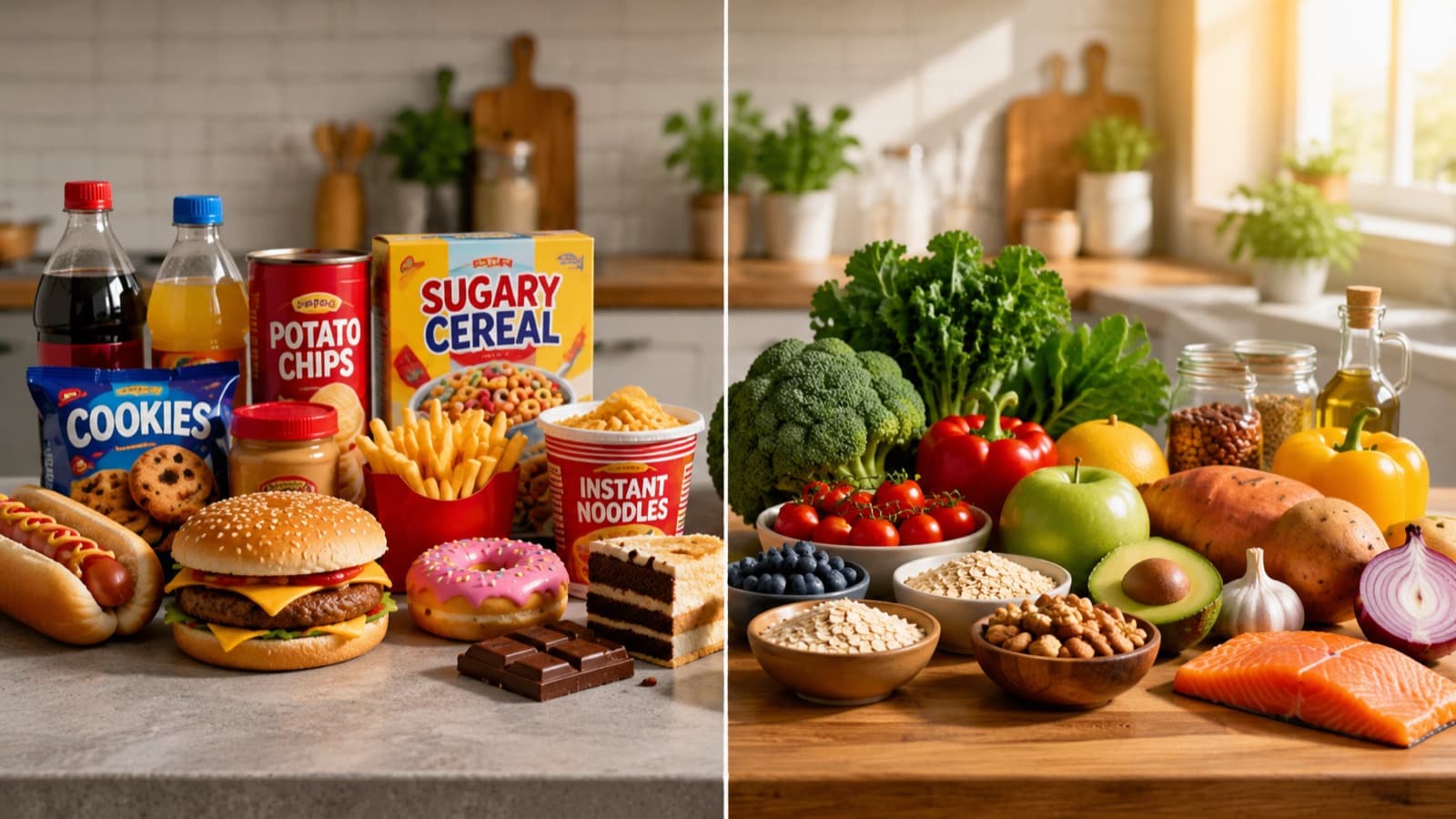
3. Ultra-Processed Foods
I know, I know. "Eat less processed food" is the most predictable advice on the planet. But the gut health connection is more specific and more concerning than the general "processed food is bad" message.
What They Do to Your Gut
Ultra-processed foods, meaning products with long ingredient lists full of things you wouldn't find in a home kitchen, have been shown to dramatically reduce gut microbial diversity. A 2024 study in The BMJ tracking over 100,000 people found that higher consumption of ultra-processed foods was associated with a 50% greater risk of inflammatory bowel conditions.
The problem isn't any single ingredient. It's the combination of additives, preservatives, emulsifiers, and refined ingredients that creates an environment your gut bacteria struggle to thrive in. Many of these compounds were never tested for their effects on the microbiome before being approved for food use.
The Practical Reality
Here's where I refuse to be preachy about this. I have two kids. We eat chicken nuggets sometimes. Boxed mac and cheese shows up at least once a month. I'm not eliminating ultra-processed foods from our lives, because that's not how real life works.
What I am doing is reducing the daily, habitual ultra-processed stuff. The things we eat on autopilot without even thinking about it.
The Swap
Instead of: Flavored instant oatmeal packets (which contain artificial flavors, colors, and preservatives) Try: Plain oats with real fruit and honey. Same prep time if you use the microwave. Two minutes.
Instead of: Packaged lunch meats with nitrates and fillers Try: Rotisserie chicken shredded into containers for the week. About the same price, way less processing.
Instead of: Fruit snacks (which are basically candy with a vitamin sticker) Try: Actual fruit. Or dried fruit with no added sugar. Made in Nature Organic Dried Fruit is one we keep stocked.
Instead of: Store-bought granola bars (check the ingredients, some have 15 to 20 additives) Try: RXBARs or Larabars, which both have short, recognizable ingredient lists.
4. Excess Added Sugar
I'm not going to tell you sugar is poison. It's not. But the amount of added sugar in the average American diet is genuinely problematic for gut health, and it's hiding in places you wouldn't expect.
What It Does to Your Gut
High sugar intake feeds the wrong kinds of bacteria. Specifically, it promotes the growth of species like Clostridioides and Enterococcus while suppressing beneficial species like Bacteroidetes. A 2020 study in PNAS found that a high-sugar diet reduced microbial diversity and damaged the protective mucus layer of the gut within days. Not weeks. Days.
Added sugar also promotes the growth of Candida yeast in the gut, which can lead to bloating, brain fog, and sugar cravings that make the cycle worse.
Where It's Hiding
The obvious sources are obvious. Soda, candy, desserts. But the sneaky sources are the ones that got me:
- Pasta sauce (some brands have more sugar per serving than cookies)
- Yogurt (flavored yogurt can have 20+ grams of added sugar)
- Bread (many brands add sugar or high-fructose corn syrup)
- Salad dressing
- Ketchup (about 4 grams of sugar per tablespoon)
The Swap
Pasta sauce: Rao's Homemade Marinara has no added sugar. It costs more than Ragu, but it tastes noticeably better. If budget is tight, Trader Joe's marinara is also low-sugar and under $3.
Yogurt: Switch from flavored to plain, and add your own fruit. This single swap can cut 10 to 15 grams of sugar per serving. My kids took about two weeks to adjust. Now they think flavored yogurt is "too sweet."
Bread: Look for breads with 2 grams of sugar or less per slice. Dave's Killer Bread is a good option that's widely available. Ezekiel bread is even better if your family will eat it (mine is 50/50).
The mindset shift: I don't count sugar grams obsessively. I just made a habit of checking labels on the things I buy repeatedly and swapping to lower-sugar versions of those specific products. Once the swap is made, I don't think about it again.
5. Certain Emulsifiers
This is the one most people haven't heard of, and it might be the most important.
What They Are
Emulsifiers are food additives that keep ingredients from separating. Think of how oil and water naturally split apart. Emulsifiers force them to stay mixed. They're in ice cream, salad dressings, non-dairy milks, bread, processed cheese, and dozens of other everyday products.
The two most studied and most concerning are polysorbate 80 and carboxymethylcellulose (CMC).
What They Do to Your Gut
A series of studies led by researchers at Georgia State University, published in Nature and Cancer Research, found that these emulsifiers erode the protective mucus layer that lines the intestines. This mucus barrier keeps bacteria at a safe distance from the intestinal wall. When it thins, bacteria come into direct contact with intestinal cells, triggering chronic low-grade inflammation.
In animal studies, polysorbate 80 and CMC promoted colitis and metabolic syndrome. Human studies are still ongoing, but a 2024 clinical trial published in Gastroenterology confirmed that removing emulsifiers from the diet improved markers of intestinal inflammation in people with Crohn's disease.
Where They're Hiding
- Ice cream (most commercial brands)
- Non-dairy milks (check the ingredients on your almond or oat milk)
- Salad dressings
- Baked goods and bread
- Processed cheese products
- Coffee creamers
The Swap
Ice cream: Look for brands with short ingredient lists. Three Twins Ice Cream or Haagen-Dazs (their basic flavors use just cream, milk, sugar, eggs, and vanilla) are options without emulsifiers.
Non-dairy milk: Elmhurst Oat Milk and Malk Almond Milk are made without gums or emulsifiers. Most standard brands like Silk and Califia contain gellan gum or locust bean gum.
Coffee creamer: Nutpods is one of the cleaner options I've found. Or just switch to a splash of real cream or whole milk, which contains zero additives.
The reality check: You can't avoid every emulsifier in every product. I focused on the products I consume daily (milk in my coffee, ice cream we eat weekly, salad dressing) and let the rest go. If I eat ice cream with guar gum at a birthday party, it's fine. It's the daily, repeated exposure that matters.
How to Start Without Losing Your Mind
I did not make all of these swaps at once. That would have been expensive, overwhelming, and a guaranteed path to quitting after two weeks.
Here's what actually works:
Week 1: Pick the swap that applies to you most. For me, it was the artificial sweetener in my coffee. One change. Get used to it.
Week 2: Read the ingredient label on your pasta sauce and bread. If they're loaded with sugar or seed oils, try one alternative next time you shop.
Week 3: Check your non-dairy milk or coffee creamer for emulsifiers. Swap if needed.
Week 4 and beyond: Slowly work through the rest at whatever pace feels sustainable.
The goal is not a perfect kitchen. The goal is a kitchen where the things you eat every single day aren't actively working against your gut. The occasional processed snack or sugar-bomb condiment isn't going to wreck your microbiome. But daily, compounding exposure to multiple gut disruptors adds up.
Small, permanent swaps beat dramatic, temporary overhauls every time.
Related reading: